
'Abdu'l-Bahá on Humanity's Ability to "Break" the Laws of Nature
Across his talks, tablets, and letters, ‘Abdu’l-Bahá returns again and again to the dynamic
relationship between humans and the natural world. It is no accident that Some Answered
Questions opens with a statement on nature. He characterizes the human intellect as a force that
allows humans to “resist and oppose nature.
“Man is able to resist and to oppose Nature because he discovers the constitution of things, and
through this, he commands the forces of Nature” [1]
He characterizes human intellect as a force capable of “resisting,” “dominating," and
“controlling” natural constraints. Most striking of all are the statements in which he describes
human beings as able to “break” the laws of nature.
“He wrests the sword from nature’s hand and uses it against nature, proving that there is a
power in him which is beyond nature, for it is capable of breaking and subduing the laws of
nature” [2]
Interpreted literally, these statements could be misconstrued as suggesting that human beings
possess a supernatural capacity to negate or suspend the fundamental laws of physics, elevating
human beings to the status of miracle workers, seemingly empowered to override physical
constraints.
This article contends that his position is more subtle and nuanced than a literalist reading of these
statements would suggest. Rather than treating this as a claim about miracles that suspend
physics, this paper contends that it as a claim about a distinctive kind of causation tied to the
rational mind. Thus, the act of “breaking” nature’s laws represents not their cancellation but their
realignment: the capacity to comprehend natural forces and bend them to serve humanity’s needs,
most clearly exemplified in technological inventions.
By examining three specific examples, namely psychological resilience in human development,
and the human engineering of lunar trajectories, this paper explores the novel approach of
‘Abdu’l-Bahá to human powers and complexity.
## Lawful Defiance
An airplane does not break any physical law. Its engines obey conservation principles, its
structure is constrained by material strength, and its trajectory is a solution to gravitational
dynamics. Its success depends on regularity: predictable combustion, predictable inertia,
predictable orbital mechanics. In that sense, the airplane epitomizes obedience to laws of nature,
not an exception to them.
Yet the airplane raises an interesting philosophical question, a question that is implicit in ‘Abdu’l-
Bahá’s statements on nature.
An airplane does not violate laws of nature, but can nature produce it?
Put differently, can something be operationally compliant with natural law and still be
“unnatural” in another sense?
A logical way to draw this distinction is to separate (1) the laws an entity obeys from (2) the
causal narrative that could account for the entity’s existence. Artifacts and organisms share the
first characteristic: both are physical systems subject to the same natural constraints. They may
diverge in the second. Many argue that a spider’s web, or a termite mound’s ventilation
structure, arises through processes that do not explicitly represent goals, even if they appear to
yield goal-directed outcomes. An airplane is created through an intentional chain: abstraction,
modeling, deliberation, error-correction, and coordinated planning. Its distinctiveness lies not in
floating above nature but in embodying intelligent-mediated processes for its formation. As
‘Abdu’l-Bahá puts it
“Man is not the captive of nature, for although according to natural law he is a being of the
Earth, yet he guides ships over the ocean, flies through the air in airplanes, descends in
submarines; therefore, he has overcome natural law and made it subservient to his wishes” [3]
This philosophical inquiry leads to the concept of “natural unnaturalness.” An artifact can be
natural in its efficient causes (materials, forces, energies) while it could be “unnatural” in its
formal organization, in the sense that the organization may not be plausibly attributable to an
unguided physical evolutionary process across time.
In this light, ‘Abdu’l-Bahá’s language of “breaking and subduing” can be read as pointing to
a deep philosophical puzzle; not that evolution can generate lawbreakers in the supernatural
sense, but whether non-intelligent evolutionary processes can generate law interpreters and law
users , beings who view nature’s constraints as something to be understood and redirected.
Against the Current Within: Confidence Beyond a Lifetime of Negation?
To explore philosophical questions raised by ‘Abdu’l-Bahá, let us have a thought experiment.
Imagine a child who evolves and grows over a long time, measured in millions of years. He
receives consistent negative messages: “you are inadequate,” “you will fail,” “you do not
belong,” “you are a loser.” The thought experiment is deliberately extreme. It frames “negative
programming” as the totality of the child’s external forces, so that adult confidence appears
impossible if the child is only an aggregate of those inputs. If the child’s psychological profile
were nothing more than the imprint of external influences, one must ask: why would the child try
to “reach” for confidence at all, let alone ultimately “become” confident? On a purely externalist
picture, the end state should mirror the long external input: shame, timidity, and learned
helplessness. Yet we are asked to imagine the opposite: the child matures into a confident adult.
 The route to confidence is not magic but a second-order capacity: the ability to reflect on one’s
own mind, step back, and intentionally reorganize one’s conditioning and upbringing. In doing
so, a person can stand apart from one’s formative history and through deliberate practice, rewrite
the psychological script into confidence and resilience. It is in this discontinuity between
environmental input and behavioral output that the philosophical dilemma appears again.
If the child were only an aggregate of external influences, why would the child ever evolve
towards confidence at all, rather than ultimately mirroring the long history of negative
programming?
Put differently: can a child, initially a clean slate yet subjected to years of deprivation and
sustained external denigration, genuinely grow beyond such conditioning, or does this require a
further capacity that can rise above those immediate psychological constraints?
The thought experiment becomes plausible only if the mind can step back from what has acted
upon it. A reflective agent can treat repeated put-downs as evidence of the parents’ shortcomings
or of the social context in which they lived, rather than as a final verdict about its own self.
Crucially, the agent can consciously reorder the mind: redirect attention, retrain self-appraisal
habits, and adopt disciplined practices that reshape its negative programming. Confidence then
becomes but a deliberate reweighting of influence, as the person tests messages against evidence,
adopts standards beyond reward and punishment, and restructures self-evaluation. The
“program” remains part of the story, but it no longer governs it.
This inward reordering can be viewed as a “lawful yet unnatural” redirection. Just as an airplane
does not violate physics yet cannot be fully accounted for by blind physical processes alone,
resilient confidence does not by itself violate psychological causality, but at the same time
cannot be explained as mere reflection of external forces. In both cases, we encounter a distinct
kind of causation. This concept-guided process remains within nature’s lawful constraints while,
at the same time, transcends nature’s local limitations and creates entities that leverage nature’s
laws against it.
Escaping Earth’s Gravity: Lawful Flight, Unlikely Origin
To leave Earth is to confront one of nature’s most formidable constraints. Escaping Earth’s
gravity is daunting, to say the least. Near the surface, gravity continually “pulls back” at every
instant of ascent, while atmospheric drag compounds the burden. Achieving orbit already
demands velocities of several kilometers per second, sustained by controlled acceleration and
precise timing. Escaping Earth’s gravitational pull requires even more energy and even tighter
tolerances. The problem is not simply going upward. It is sustaining a carefully managed
sequence of forces long enough to shift from ordinary falling to orbital motion, and then adding
the additional energy needed to depart a bound trajectory altogether.
The Lunar Module, within the larger Apollo system that delivered it. The achievement is not a
loophole in nature but an exacting submission to nature’s regularities. Gravity is neither
suspended nor weakened. Through careful deliberation, those same dependable laws are
leveraged against their default tendencies: gravity and inertia are not resisted blindly but
calculated and recruited, so the very constraints that bind the craft to Earth become the
conditions that make controlled escape and navigation possible.
The route to confidence is not magic but a second-order capacity: the ability to reflect on one’s
own mind, step back, and intentionally reorganize one’s conditioning and upbringing. In doing
so, a person can stand apart from one’s formative history and through deliberate practice, rewrite
the psychological script into confidence and resilience. It is in this discontinuity between
environmental input and behavioral output that the philosophical dilemma appears again.
If the child were only an aggregate of external influences, why would the child ever evolve
towards confidence at all, rather than ultimately mirroring the long history of negative
programming?
Put differently: can a child, initially a clean slate yet subjected to years of deprivation and
sustained external denigration, genuinely grow beyond such conditioning, or does this require a
further capacity that can rise above those immediate psychological constraints?
The thought experiment becomes plausible only if the mind can step back from what has acted
upon it. A reflective agent can treat repeated put-downs as evidence of the parents’ shortcomings
or of the social context in which they lived, rather than as a final verdict about its own self.
Crucially, the agent can consciously reorder the mind: redirect attention, retrain self-appraisal
habits, and adopt disciplined practices that reshape its negative programming. Confidence then
becomes but a deliberate reweighting of influence, as the person tests messages against evidence,
adopts standards beyond reward and punishment, and restructures self-evaluation. The
“program” remains part of the story, but it no longer governs it.
This inward reordering can be viewed as a “lawful yet unnatural” redirection. Just as an airplane
does not violate physics yet cannot be fully accounted for by blind physical processes alone,
resilient confidence does not by itself violate psychological causality, but at the same time
cannot be explained as mere reflection of external forces. In both cases, we encounter a distinct
kind of causation. This concept-guided process remains within nature’s lawful constraints while,
at the same time, transcends nature’s local limitations and creates entities that leverage nature’s
laws against it.
Escaping Earth’s Gravity: Lawful Flight, Unlikely Origin
To leave Earth is to confront one of nature’s most formidable constraints. Escaping Earth’s
gravity is daunting, to say the least. Near the surface, gravity continually “pulls back” at every
instant of ascent, while atmospheric drag compounds the burden. Achieving orbit already
demands velocities of several kilometers per second, sustained by controlled acceleration and
precise timing. Escaping Earth’s gravitational pull requires even more energy and even tighter
tolerances. The problem is not simply going upward. It is sustaining a carefully managed
sequence of forces long enough to shift from ordinary falling to orbital motion, and then adding
the additional energy needed to depart a bound trajectory altogether.
The Lunar Module, within the larger Apollo system that delivered it. The achievement is not a
loophole in nature but an exacting submission to nature’s regularities. Gravity is neither
suspended nor weakened. Through careful deliberation, those same dependable laws are
leveraged against their default tendencies: gravity and inertia are not resisted blindly but
calculated and recruited, so the very constraints that bind the craft to Earth become the
conditions that make controlled escape and navigation possible.
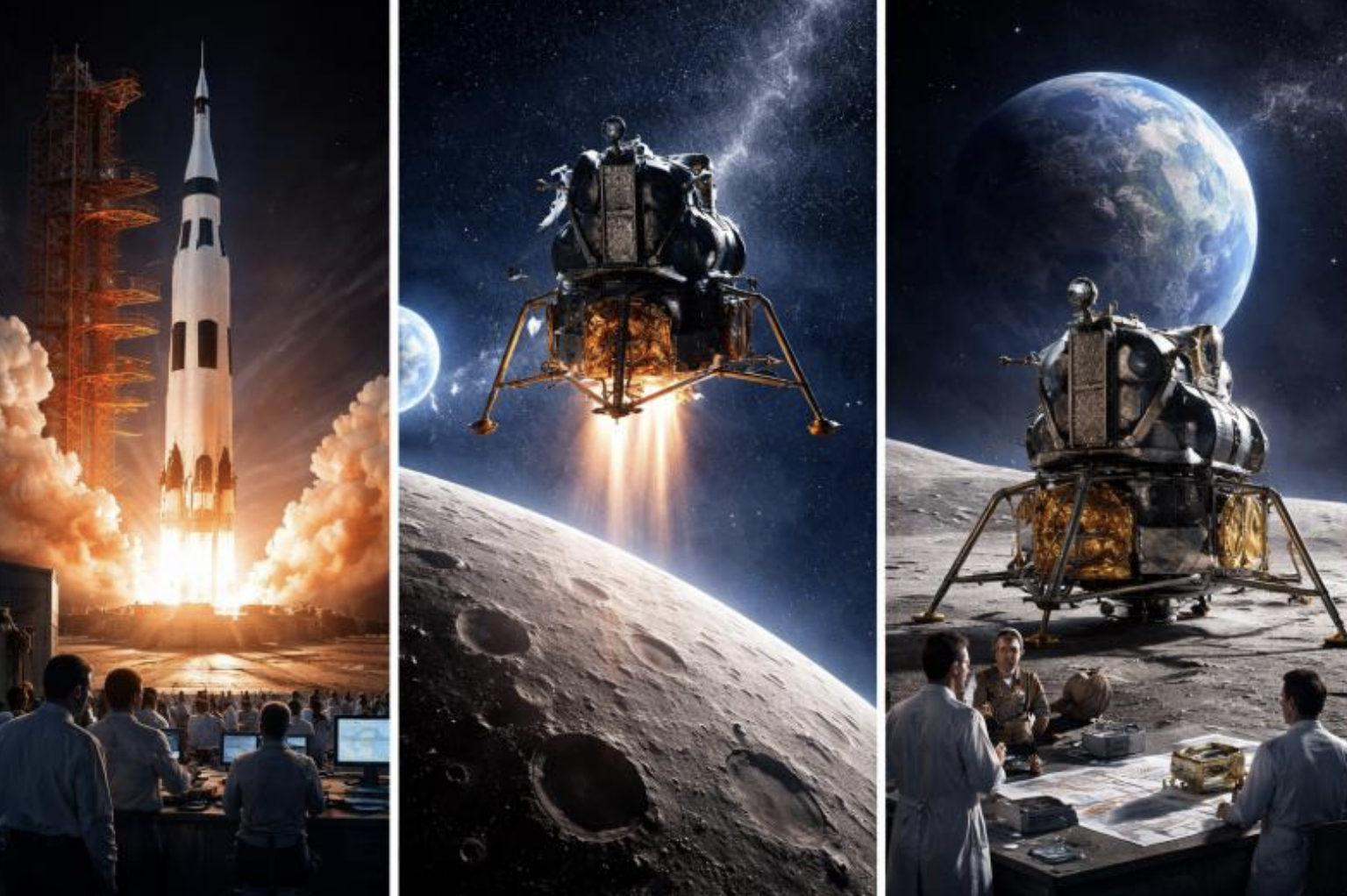 Yet this technological achievement immediately reopens the more profound philosophical
quandary.
_If the module's escape depends on deliberate calculation, representation, and purposive
sequencing, what could account for the origin of such an arrangement in the first place?_
Blind processes can yield outcomes permitted by physics, but they do not, by themselves, "aim"
at configurations that harness constraints as instruments to go against them. An evolving
aggregation of atoms has no reason to converge on staged propulsion, guidance logic, or a
trajectory plan that treats gravity as a predictable scaffold rather than a barrier. The question,
then, is not whether the Lunar Module breaks nature's laws, but how a world governed by those
laws could give rise to an agent capable of understanding natural laws and intentionally turning
them against nature's tendencies. Abdu'l-Bahá has articulated the same concepts in many of his
talks.
_“Consider, for example, that man according to natural law should dwell upon the surface of the
earth. By overcoming this law and restriction, however, he sails in ships over the ocean, mounts
to the zenith in airplanes and sinks to the depths of the sea in submarines. This is against the fiat
of nature and a violation of her sovereignty and dominion.”_ [4]
Yet this technological achievement immediately reopens the more profound philosophical
quandary.
_If the module's escape depends on deliberate calculation, representation, and purposive
sequencing, what could account for the origin of such an arrangement in the first place?_
Blind processes can yield outcomes permitted by physics, but they do not, by themselves, "aim"
at configurations that harness constraints as instruments to go against them. An evolving
aggregation of atoms has no reason to converge on staged propulsion, guidance logic, or a
trajectory plan that treats gravity as a predictable scaffold rather than a barrier. The question,
then, is not whether the Lunar Module breaks nature's laws, but how a world governed by those
laws could give rise to an agent capable of understanding natural laws and intentionally turning
them against nature's tendencies. Abdu'l-Bahá has articulated the same concepts in many of his
talks.
_“Consider, for example, that man according to natural law should dwell upon the surface of the
earth. By overcoming this law and restriction, however, he sails in ships over the ocean, mounts
to the zenith in airplanes and sinks to the depths of the sea in submarines. This is against the fiat
of nature and a violation of her sovereignty and dominion.”_ [4]
 Read in this light, the gist of 'Abdu'l-Bahá's claim is not that human beings cancel natural law,
but that a distinct mode of causation can arise: rational agency that understands, selects, and
reorganizes natural forces towards its needs. Ships, airplanes, submarines, and the Lunar Module
are not exceptions to nature; they are demonstrations of a new relation to nature, in which natural
limitations become usable conditions through knowledge and purposeful coordination. What is
"overcome" is not gravity or fluid dynamics themselves, but the artifact’s creator's prior
subjection to blind processes that program it to obey nature's constraints rather than go against
them. The philosophical principle presented is that "breaking" nature's laws reflects a shift in
capacity: the emergence of mind as a power that can redirect what blind process alone would
never intentionally assemble_._
**Conclusion: Emergence or Privilege?**
'Abdu'l-Bahá's claim that humanity can "break" and "subdue" nature invites a final question that
the examples in this paper have kept pressing from different angles: _can the human capacity to
redirect nature be fully explained as the output of natural processes, or does it signal a privilege
that is not explained by those processes?_
The airplane, the resilient mind, and the lunar trajectory do not suspend physics or override
causality. These scenarios succeed precisely because nature is stable, measurable, and
dependable. In that sense, "breaking" cannot mean cancellation of the natural law. It must mean a
change in relation to law, where constraints remain intact yet become usable through
understanding.
But this is where the philosophical dilemma returns. Nature can generate complexity and
behavior that appears goal-directed without explicit foresight. The more complex issue is
whether blind process can generate _law-interpreters and law-users,_ beings who can represent,
analyze constraints, compare alternatives, and deliberately organize means toward ends that
nature itself does not specify. The child thought experiment makes the point inwardly: if a person
were only a passive imprint of external forces, why would the person ever rise toward self-
revision at all? The lunar mission makes the point explicitly: if matter and life were evolving
only under local pressures and nature's influences, what accounts for the emergence of
conceptual planning, abstract reasoning, and the long discipline of experimentation that turns
gravity from a mighty barrier into a navigable scaffold?
Two broad readings are possible and should be reflected on. On one reading, rational agency is
an extraordinary but ultimately continuous outgrowth of natural history: evolution yields minds
that are capable of abstraction, and abstraction yields the ability to reorganize forces. This
reading needs to be harmonized with 'Abdu'l-Bahá’s statement that:
_“Now,when you behold in existence such organizations, arrangements and laws can you say that
all these are the effect of Nature, though Nature has neither intelligence nor perception?”_ [5]
On the other hand, one can argue that there is a qualitative threshold that natural description does
not fully capture: the emergence of reason introduces a mode of causation that cannot be reduced
to blind evolutionary processes. Either way, the examples converge on a single conclusion: the
distinctive human power is not lawbreaking but _lawful redirection_ , grounded in concepts,
reflection, and deliberate choice.
So 'Abdu'l-Bahá's language about man's relation to nature is not a call to marvel at outward
miracles performed by humans, but to contemplate the unique capacities of humans that
transcend nature. In the final analysis, an urgent corollary question remains: what will humanity
do with a consciousness that can bend the laws of nature toward ends of its own choosing?
- [1] SAQ page
- [2] PUP page
- [3] PUP page
- [4] PUP
- [5] SAQ page
Read in this light, the gist of 'Abdu'l-Bahá's claim is not that human beings cancel natural law,
but that a distinct mode of causation can arise: rational agency that understands, selects, and
reorganizes natural forces towards its needs. Ships, airplanes, submarines, and the Lunar Module
are not exceptions to nature; they are demonstrations of a new relation to nature, in which natural
limitations become usable conditions through knowledge and purposeful coordination. What is
"overcome" is not gravity or fluid dynamics themselves, but the artifact’s creator's prior
subjection to blind processes that program it to obey nature's constraints rather than go against
them. The philosophical principle presented is that "breaking" nature's laws reflects a shift in
capacity: the emergence of mind as a power that can redirect what blind process alone would
never intentionally assemble_._
**Conclusion: Emergence or Privilege?**
'Abdu'l-Bahá's claim that humanity can "break" and "subdue" nature invites a final question that
the examples in this paper have kept pressing from different angles: _can the human capacity to
redirect nature be fully explained as the output of natural processes, or does it signal a privilege
that is not explained by those processes?_
The airplane, the resilient mind, and the lunar trajectory do not suspend physics or override
causality. These scenarios succeed precisely because nature is stable, measurable, and
dependable. In that sense, "breaking" cannot mean cancellation of the natural law. It must mean a
change in relation to law, where constraints remain intact yet become usable through
understanding.
But this is where the philosophical dilemma returns. Nature can generate complexity and
behavior that appears goal-directed without explicit foresight. The more complex issue is
whether blind process can generate _law-interpreters and law-users,_ beings who can represent,
analyze constraints, compare alternatives, and deliberately organize means toward ends that
nature itself does not specify. The child thought experiment makes the point inwardly: if a person
were only a passive imprint of external forces, why would the person ever rise toward self-
revision at all? The lunar mission makes the point explicitly: if matter and life were evolving
only under local pressures and nature's influences, what accounts for the emergence of
conceptual planning, abstract reasoning, and the long discipline of experimentation that turns
gravity from a mighty barrier into a navigable scaffold?
Two broad readings are possible and should be reflected on. On one reading, rational agency is
an extraordinary but ultimately continuous outgrowth of natural history: evolution yields minds
that are capable of abstraction, and abstraction yields the ability to reorganize forces. This
reading needs to be harmonized with 'Abdu'l-Bahá’s statement that:
_“Now,when you behold in existence such organizations, arrangements and laws can you say that
all these are the effect of Nature, though Nature has neither intelligence nor perception?”_ [5]
On the other hand, one can argue that there is a qualitative threshold that natural description does
not fully capture: the emergence of reason introduces a mode of causation that cannot be reduced
to blind evolutionary processes. Either way, the examples converge on a single conclusion: the
distinctive human power is not lawbreaking but _lawful redirection_ , grounded in concepts,
reflection, and deliberate choice.
So 'Abdu'l-Bahá's language about man's relation to nature is not a call to marvel at outward
miracles performed by humans, but to contemplate the unique capacities of humans that
transcend nature. In the final analysis, an urgent corollary question remains: what will humanity
do with a consciousness that can bend the laws of nature toward ends of its own choosing?
- [1] SAQ page
- [2] PUP page
- [3] PUP page
- [4] PUP
- [5] SAQ page
The Human Brain: The Missing Link in Scientific and Philosophical
Narratives of Human Evolution
Humanity’s distinctive power to think in symbols, juggle imaginary numbers, weigh moral hypotheticals, or design spacecraft for worlds we have never seen – for the most part, remains a mystery. Standard evolutionary narratives hold that such powers arose after a relatively recent split from a chimp-like ancestor some five to seven million years ago. Yet, we still lack a clear biological account of how the human brain made the qualitative leap from primate cognition to abstract, recursive thought. Therefore, it is surprising how rarely the human brain’s neurology features in scientific debates about our evolutionary history.
Too often, the conversation ends with percentages of shared DNA and fossil fragments, leaving the quantum leap of human cognition -and the neural machinery behind it – on the sidelines. This gap between genomic markers and cognitive functionality raises an interesting epistemological question: How much confidence can we place in a precise evolutionary path for humans when we still lack a clear correlation between genetic and neurological configurations and the uniquely human capacity for abstract thought?
Using this question as its starting premise, we will explore additional questions—including whether humans might be categorically different from all other animals.
To this end, the article revisits primary Bahá’í texts to extract ontological insights into mind, spirit, and humanity’s distinctive station; sets out epistemological guardrails that allow faith- informed perspectives to question mainstream scientific assumptions without drifting into dogma or pseudoscience; and notes current limitations in evolutionary science, especially the still- unclear link between brain neurology and abstract thought. It then proposes a collaborative framework in which theologians, philosophers, and scientists can engage in sustained dialogue, keeping the scientific method, respect for empirical data, purpose, meaning, and ethical responsibility at the center of evolutionary inquiry.
Philosophy and Science: Partners or Strangers
Skeptics sometimes ask whether philosophy still has anything to say about the material world - especially when the topic is as technically complex as biological evolution. During a public discussion with Richard Dawkins, the renowned scientist Neil deGrasse Tyson voiced his doubts about philosophy[1]. Tyson noted that although philosophers once propelled science forward, everything changed in the 1920s. The discovery of the expanding universe and the advent of quantum mechanics pushed the field far beyond what could be solved by “armchair” reasoning. Lacking the new experimental tools, he argued that philosophers, who are “would-be scientists without a laboratory,” in his words, are rendered “essentially obsolete.”
Yet history offers a counternarrative. In one of his letters [2], ʿAbdu’l-Bahá remarks that careful philosophical reasoning already points toward an evolving cosmos, that nature, by its very
essence, is imperceptible to the senses, and light is a vibration of an intangible medium—ideas that later found resonance in twentieth-century science. Far from trailing science, philosophical reasoning anticipated and sketched novel conceptual frameworks that experimentalists would only fill decades later. The episode reminds us that calling philosophy obsolete often reflects group thinking, believing that empirical methods alone reign supreme and surpass philosophical reasoning.
‘Abdu’l-Bahá often argued that European thinkers misunderstood human evolution because they relied solely on sense-driven, rigid methods. He insisted knowledge must draw on broader, more flexible approaches—directly challenging the methodological strictness that later culminated in the logical empiricism movement in the 1920s. In his talk in San Francisco, he stated the following:
“During my visit to London and Paris last year, I had many talks with the materialistic philosophers of Europe. The basis of all their conclusions is that the acquisition of knowledge of phenomena is according to a fixed, invariable law—a law mathematically exact in its operation through the sensed. That is to say, the materialists announce that the criterion and standard of human knowledge is sense perception [3].”
What, then, can philosophy contribute to the discussion of biological evolution? Philosophy should complement, not oppose, empirical data, offer interpretive frameworks for understanding that data and clarify the degrees of uncertainty associated with resulting conclusions. Unfortunately, most philosophical narratives on evolution often mirror the tendency to downplay human abstract thought. Many modern evolutionary accounts, framed by strictly naturalistic assumptions, depict humans as “smart apes,” treating abstract reasoning as a modest extension of animal cognition requiring no special explanation. By focusing on humanity’s defining capacity for abstraction, philosophers can re-examine our evolutionary story and assess what kinds of
evidence might truly bridge the gap between philosophical reflection and empirical science.
Revisiting Bahá’í Text on Evolution
It bears emphasizing that the Bahá’í perspective diverges sharply from literalist creationism and instead strongly aligns with the central thrust of modern science: life has unfolded through a vast, evolutionary timescale.
“But this permanence was not definite, and did not attain realization and perfect existence until after a very long time. Then these elements became composed and organized and combined in infinite forms; or rather from the composition and combination of these elements innumerable beings appeared. [4] “
Building on this sense of gradual emergence, the Bahá’í writings also inherit—and refine—a long-standing philosophical tradition of classifying life by its defining capacities. The practice is anything but novel: it refers to the earliest Greek thinkers and finds systematic expression in Aristotle’s three-tier vegetable, animal, and human hierarchy. The crucial human distinction for
Aristotle was reason—the mind’s power to grasp abstractions rather than merely to sense or grow. Nearly two millennia later, the Bahá’í writings revive and elaborate this hierarchy. ‘Abdu’l- Bahá states:
“Man is distinguished above the animals through his reason. The perceptions of man are of two kinds: tangible, sensible, and reasonable, whereas the animal perceptions are limited to the senses [5]. "
From a Bahá’í perspective, plants, animals, and humans do not form indistinct points along one evolutionary continuum; each occupies a distinct category defined by a characteristic capacity: plant growth, senses in animals, and abstract thought for humans. However, what sets these categories apart is more than a difference in function; it is a qualitative difference in biological complexity , or what ‘Abdu’l-Bahá calls the “mingling and combination of elements."
In Some Answered Questions , he explains that the animal spirit arises from a more intricate blending of the same elemental building blocks:
"After this is the animal spirit, which also results from the mingling and combination of
elements. But this combination is more complete [6]. "
Speaking of humanity’s physical complexity, he declares:
" The body of man ... is the most solid construction, the noblest combination, the most
perfect existence. " "The perfection of man is entirely due to the composition of the atoms
to the method of their combination [7] ."
Complexity resides not in new ingredients; plants, animals, and people share the same atoms but in how those atoms are organized and interact. A simple rearrangement yields the stirrings of sensation; a more elaborate architecture unlocks the realms of language, mathematics, and moral reasoning.
Bahá’í writings extend this idea by linking the spiritual categories of vegetable, animal, and human spirits to a layered physical hierarchy that unfolds over immense timescales. If this perspective is valid, it harmonizes Aristotelian distinctions with the modern focus on biological organization, implying that abstract thought emerges only when matter is combined with unparalleled intricacy. While such a view does not settle every evolutionary question, it suggests that tracing human origins requires more than comparing genetic sequences; it also demands close attention to the organizational thresholds that, in Bahá’í framework, keep the realms of plant, animal, and human genuinely distinct.
Some Bahá’í commentators have read ‘Abdu’l-Bahá as implying that every individual species arose independently from the beginning of life on Earth. ‘Abdu’l-Bahá states that vegetables cannot evolve into animals , and animals cannot evolve into humans [8]. Taken at face value, this seems less a claim about the separate evolution of every species than an attempt to mark categorical boundaries among the three kingdoms. Evolutionary change, in this view,
could still proceed within each realm, while transitions between realms would require a qualitative shift in complexity that ordinary variation might not achieve.
Another interpretive question centers on ‘Abdu’l-Bahá’s well-known womb analogy:
“as man in the womb of the mother passes from form to form, from shape to shape, changes and develops, and is still the human species from the beginning of the embryonic period—in the same way man, from the beginning of his existence in the matrix of the world, is also a distinct species [9]. "
Some readers take this to mean that a non-philosophical reading of this analogy implies that the human lineage began an entirely separate path at the beginning of life on Earth. A closer reading, however, suggests a more nuanced point. An embryo develops only within an existing womb; its growth presupposes a supporting environment. By the same logic, the emergence of the human species would require a pre-existing ecological and biological framework before the distinctly human evolutionary path can unfold. This analogy suggests that human life could only emerge after a suitable biological and ecological framework existed rather than at the beginning
of life on Earth.
When Bahá’í Scripture and Science Agree: The Separate Evolution of Plants and
Animals
The Bahá’í ontological hierarchy becomes most transparent- and least controversial - at the boundary between the vegetable and animal kingdoms, a boundary that modern biology likewise regards as impermeable. ‘Abdu’l-Bahá captures the point in the following statement:
" When we examine the vegetable kingdom, we see that the fruits of the different trees do not arrive at maturity at one time; on the contrary, some come first and others afterward. This priority does not prove that the later fruit of one tree was produced from the earlier fruit of another tree…In the same way, the fact that the animal having preceded man is not a proof of the evolution… that man was raised from the animal world to the human world [10]. "
Priority does not equate to ancestry. Biology underscores this point. Approximately one billion years ago, two major evolutionary groups diverged from a single-celled eukaryotic ancestor. The lineage that became plants acquired chloroplasts synthesized cellulose cell walls, and adopted a photoautotrophic, static lifestyle. The lineage that became animals dispensed with rigid walls shifted to heterotrophic metabolism and eventually evolved neurons that support mobility and sensory integration. Since that split, no lineage has reversed or crossed these fundamental organizational boundaries.
Why is the divide so final? A plant’s rigid cell wall cannot simply transform, step by step, into the flexible membrane that lets animal nerve cells fire rapid signals, nor can a light-harvesting chloroplast be refitted into the acid-filled stomach of a predator. Likewise, a stationary stalk does not incrementally acquire the muscles, joints, and instantaneous neural coordination needed for
roper movement. The genetic programs that govern plant growth differ fundamentally from those that lay out an animal body, and even their basic energy strategies—soaking up sunlight versus hunting for food—pull them along separate evolutionary tracks. Once these contrasting designs locked in, ecology sealed the divide: plants turned sunlight into oxygen, animals adapted to
breathe and feed on them, and the two kingdoms settled into mutually exclusive niches that have endured ever since.
Strikingly, two very different knowledge traditions converge on the same conclusion. Scripture’s ontology and evolutionary biology’s phylogenetic tree affirm that plants and animals occupy discrete domains, not successive points on a single continuum - an even more notable agreement, given the question’s complexity and the distinct methods each tradition employs. Their distant common ancestor merely underscores the categorical discontinuity introduced by divergent organizational thresholds.
The convergence of the Bahá’í framework and scientific accounts in tracing the evolutionary trajectories of plants and animals raises a further point of inquiry: if the plant–animal divide is so decisive, could an equally sharp boundary separate animals from humans that arises from the emergence of abstract thought? What kind of evidence such as human-exclusive neural architecture, unique developmental blueprints, or cognitive capacities unattainable by any other
animal—would be strong enough to suggest that such a boundary truly exists?
From Law-Follower to Law-Bender: Evolution’s Paradox
Within the Bahá’í framework, the critical distinction among life forms lies not in anatomical variance but in how each interacts with the laws of nature. Plants operate according to phototropic processes; animals act through instinctual drives; both remain, in ʿAbdu’l-Bahá’s words, " captives of nature." Only one creature, he insists, refuses its chains:
“Nature is the ruler of all except man [11] ."
“Man, as it were, takes the sword out of nature’s hand and with it for his scepter of authority dominates nature itself [12]. “
This assertion is not merely rhetorical. ʿAbdu’l-Bahá has redefined complexity. According to the laws of physics, a bipedal organism should remain earthbound and constrained by gravity. Yet, humanity transcends these natural limitations: “he guides ships over the ocean, flies through the air in airplanes, descends in submarines." Ships and planes do not break the laws of physics but l everage these laws to transcend nature’s local limitations. Unlike other species-however adaptive- humans conceptualize tools that manipulate natural constraints at a fundamental level. Unlike other species, humans alone reconfigure physical laws through abstraction and can employ mathematics to predict the timing of the next comet.
This functional sovereignty over nature reaches deeper than technology. ʿAbdu’l-Bahá lists the faculties that enable it- “intelligence… volition… memory… the reasoning faculty.” Modern cognitive science would add recursion and counterfactual imagination, yet the substance is the
same: humans act on possibilities that no sensory cue provides. We hypothesize atoms, invent zero, and legislate human rights. These theoretical constructs, atomic models, numerical systems, and moral codes presuppose a cognitive power transcending immediate environmental stimulus.
If plants and animals parted company when photosynthesis and predation set them on mutually exclusive tracks, humanity’s leap into symbolism may mark an additional categorical divide. This leap would not represent a mere extension of prior capacities but the emergence of a qualitatively distinct biological order: a shift from being wholly governed by natural law to modulating it through reflection. A shift from being ruled by nature to ruling - at least partly - over it.
ʿAbdu’l-Bahá draws the logical conclusion: “Therefore, he is the ruler and commander of nature… Man is nobler than nature [13] ." One need not invoke spiritual vocabulary to comprehend this unique human capacity. The empirical record has yet to show an animal civilization launching satellites or drafting constitutions. Until it does, the possibility remains that, just as plants and animals inhabit separate domains, humans may occupy a domain of their own - demarcated by the power to turn nature’s law into a tool rather than be governed by it.
Yet this claim - a creature forged entirely within nature can later step outside its limits—poses an interesting dilemma. Evolution, as typically told, is a long obedience to physics and chemistry: mutations shuffle molecules, selection prunes unfit bodies, and gravity presses every experiment to the ground. How does such a law-bound process produce an organism that can deliberately leverage those same laws against itself, launching lunar modules past Earth’s escape velocity and navigating the vacuum between worlds?
From a strict Darwinian paradigm, the feat looks counter-intuitive. Natural selection rewards traits that solve local problems - finding food, fleeing predators, and reproducing before winter sets in. Rocket science meets none of those immediate constraints. It requires abstract imagination and the collective endeavor to refine calculus for three centuries. No other lineage, however ancient, has transformed basic survival skills into the capacity to calculate trajectories for interplanetary navigation.
In the Bahá’í perspective, the paradox is a clue rather than a contradiction. Plant and animal kingdoms illustrate how new capacities appear when matter reaches higher orders of organization; the human capacity to reverse-engineer nature may mark yet another organizational threshold, one where mental constructs, not just molecules, become causal forces in the world. Science becomes the latest expression of that threshold: the mind turns its explanatory lenses back on the process that produced it, rewriting local constraints into global possibilities.
Whether described as spirit, emergent complexity, or a “second genesis,” the fact remains: evolution has delivered at least one species capable of leveraging physical law against immediate physical limitations. Until we understand how that turnaround occurred—how a captive of gravity became its navigator; the story of human origins will retain an element of awe, pointing to boundaries in nature that raw incrementalism alone may not easily cross.
Probing this pivotal transition requires turning inward to the cerebral cortex, which makes defying gravity or any other natural constraint possible. Beneath the cortex lies a largely uncharted frontier: the genes, cell types, and high-dimensional networks that convert neural activity into mathematics, art, and engineered motion. Murat Gunel, a professor of genetics and neurobiology at Yale regarding a study in 2011, stated that:
The demonstration of the fundamental role of this gene in human brain development affords us a step closer to solving the” mystery of the crown jewel of creation, the cerebral cortex. [14]”
In 2017, the authors of another study on the human brain discovered that the organ operates on “up to 11 different dimensions” , creating multiverse-like structures that are “a world we had never imagined. [15] "
The scientific advancement into the brain gained momentum in the 2020s; for example, an international NIH-BRAIN Initiative project released over twenty companion papers mapping more than 3000 distinct kinds of brain cells across practically every region of the adult human brain [16]. The open atlas gives scientists a reference map for studying everything from memory to mental illness.
These advances make one point clear: the brain’s sheer complexity has traditionally kept empirical research in low gear, and only now is neuroscience gaining real momentum. We are still merely scratching the surface of our understanding of the brain’s neurology and its functional sub-systems. Small wonder, then, that most narratives of human evolution have sidestepped the brain’s architectural configuration altogether.
Current evolutionary narratives merit respect but should remain tentative. The genetic and fossil evidence is compelling, but our understanding of the mind’s architecture is still unfolding. The prevailing evolutionary models should not be viewed as final accounts but as working hypotheses, open to revision as the architecture of the mind becomes clearer.
The Journey Matters: Why Method Outshines Finality
It is illuminating to begin with Shoghi Effendi’s 1932 reply to Dr. J. W. Freudenberg [17]- a letter that questioned several statements attributed to ʿAbdu’l-Bahá about human origins. Freudenberg’s concerns echo today’s scientific objections to a literal reading of Bahá’í references to evolution. Instead of defending each contested phrase in isolation, Shoghi Effendi outlined general principles for navigating apparent conflicts between revelation and empirical science.
He anchored the exchange in a guiding axiom - “nothing can exceed its own potentialities." Stones, plants, animals, and humans are viewed as discrete stages on a hierarchy of latent capacities, shifting attention from outward form to inner trajectory. Whether early humans looked ape-like is less significant than the claim that human potential was present “from the very beginning of creation ."
Next came methodological balance. Divine revelation, he noted, arrives through “divinely inspired Educators," while science offers the best reading of natural facts available at any moment—even though “what science tells us today… tomorrow may be entirely changed” by fresh data. The practical virtue is humility: scripture must be read in context; science must accept its provisional status.
He cautioned against textual tunnel vision : These various statements must be taken in conjunction with all the Bahá’í teachings.” Isolating a single passage distorts the larger picture. A
synthetic reading, placing scripture, philosophy, and evolving data side by side, yields a more robust framework.
Finally, Shoghi Effendi applied a developmental perspective to the human form: “We don’t believe man has always had the form of man," yet evolution was never a “haphazard branch of the ape family." The human blueprint was latent from the outset, awaiting the right conditions to unfold and actualized under suitable evolutionary conditions. Shoghi Effendi’s correspondence emphasizes that methodology is as crucial as outcome. He upheld the principle that no being can exceed its potential, advocated for a balanced relationship between science and revelation, cautioned against decontextualized interpretations, and treated scientific claims as provisional.
This process-oriented view parallels broader intellectual traditions - from Aristotle’s classifications to ʿAbdu’l-Bahá division of nature into kingdoms and the development of various neuroscientific models. Despite the disciplinary variations, these frameworks converge on a shared challenge: translating raw biological inventories—genes, cell types, wiring graphs, into a coherent account of the emergent capacities they supposedly underwrite. Until we can show how structural complexity produces symbolic language, moral reasoning, and technological inventions, our explanations of human origins remain partial, however precise their measurements may appear.
Emphasis on process calls for epistemic humility. The recent human-chimpanzee divergence is the best available model but remains provisional. If future research demonstrates that distinctively human behaviors are underpinned by foundational neural architectures absent in all other species, such findings could warrant recognition of a categorical boundary leading to a reframing of our view- not that humans evolved, but humans evolved from animals.
Conclusion: Toward a Synthesis of Philosophy and Neuroscience
Despite decades of inquiry, philosophy and neuroscience have often approached the human brain from separate vantage points; philosophy treats the mind abstractly, and neuroscience focuses more on structure and function without addressing conceptual implications. Yet the human brain may offer a point of integration where both disciplines converge. Real progress will require a partnership in which philosophical reasoning provides conceptual coherence, and neuroscience contributes to empirical specificity.
A shared framework for complexity is essential. Rather than simply counting neurons or cataloging genes, both fields must address how particular biological configurations give rise to capacities such as symbolic language, abstract reasoning, or the construction of technologies that allow humans to override natural constraints. Neuroscience research studies can trace the developmental pathways from genetic variation to behavior. Philosophy can clarify which cognitive features, such as counterfactual thinking, moral foresight, and open-ended creativity, represent qualitative rather than quantitative departures from other species.
This line of inquiry also invites a deeper question: can the behaviors unique to humans, such as manipulating the environment at scale or formulating scientific laws that themselves reshape
human life, be tied to a level of biological and cognitive complexity that warrants classification as a distinct category? In other words, does the human capacity to “bend” the laws of nature to its favor reflect an underlying architecture so differentiated that it no longer fits within the continuum of animal cognition?
Both disciplines would benefit from shared evaluative tools. A composite index, measuring network dimensionality, cell-type diversity, and behavioral adaptability, could help philosophers empirically ground category distinctions while offering scientists a benchmark for identifying functional thresholds. Computational models that integrate biological constraints with cultural and symbolic systems could act as collaborative spaces; philosophers scrutinize the model’s assumptions; scientists test and refine its predictive scope.
At the foundation of this effort lies epistemology - the branch of philosophy concerned with the nature, scope, and justification of knowledge. For science, it defines the limits of generalization, highlights model dependence, and ensures that theory remains responsive to evidence. Philosophy disciplines speculation and strengthens the link between abstract claims and observable realities. Shared epistemic commitments are indispensable, such as making auxiliary assumptions explicit, recognizing that data can undermine theory, and treating timelines as provisional. Falsifiability, transparency, and openness to anomaly serve as standard safeguards.
Institutional humility must accompany this methodological rigor. Philosophers must avoid abstraction that is disconnected from empirical constraint. Scientists must recognize that without interpretive frameworks, data cannot fully explain. Joint academic programs, interdisciplinary research teams, and co-authored publications can institutionalize this synthesis and encourage sustained collaboration.
Ultimately, both disciplines must stay focused on a central question: Does the architecture of the human brain support a mode of cognition so structurally and behaviorally distinct that it constitutes a categorical boundary - analogous to the divide between animals and plants? If so, mapping that threshold will require conceptual precision, empirical depth, and a framework in which science and philosophy speak not in parallel but in concert.
-
Some Answered Questions (SAQ), p. 230
-
Paris Talks (PUP), p. 16 — “Nature is ruler of all except man”
-
Tiny Variation in One Gene May Have Led to Crucial Changes in the Human Brain — Yale Medicine
-
Our Brains Think in 11 Dimensions, Discover Scientists — Big Think
-
Donaldson, Bryan. Appendix C: On the Originality of Species — The Convergence of Evolutionary Science and Bahá’í Teachings
Rethinking the Design Question: 'Abdu'l-Bahá's Revolutionary
# Synthesis of Design, Emergence, and Free Will
This essay examines Darwinian accounts and the modern Intelligent Design (ID) movement’s
approach to questions of intelligent causation and offers an interpretation of a Bahá’í-oriented
framework on the subject. It is intended as a starting point for inquiry, not a final or authoritative
treatment. Accordingly, the discussion is provisional: it sketches the conceptual terrain,
highlights promising lines of argument, and points to where later work can refine, revise, or
extend the approach.
This essay neither endorses the Intelligent Design Movement’s scientific, religious, or political
interpretations nor adopts its cultural or policy agendas
The analysis outline here reflects the author’s own interpretation and should not be taken as an
official Bahá’í position or as part of the authoritative Bahá’í writings.
## The Eternal Struggle to Discern Meaning in Randomness
Human beings excel at finding patterns, inferring agency, and linking regularities to purposes.
We readily “see” faces in the Moon, animals in clouds, or profiles in wood grain, and hear
meaning in noise - radio static forming words or ambiguous voicemails sounding human after
repeated listening. We interpret chance as significant: hot hands in sports, lucky streaks at
roulette, or runs of correct guesses feel like evidence of special causation rather than ordinary
variance. Coincidences seem to be everywhere; matching shirts, recurring numbers, unlikely
meetings feel like it was fate.
Yet inferring design from patterns is often warranted and helpful: grammatical sentences, QR
codes, road signs, keys matching locks, or circuit board traces point to agency because we know
which processes reliably generate such structures.
This pattern-seeking logic drives efforts to detect extraterrestrial intelligence, searching for
engineered regularities rather than background noise, and cybersecurity intrusion detection,
which recognizes structured and repeated behaviors. Carl Sagan’s Contact captures the tension:
combing vast data streams for credible hallmarks of intelligence while resisting the impulse to
treat every anomaly as evidence of mind.
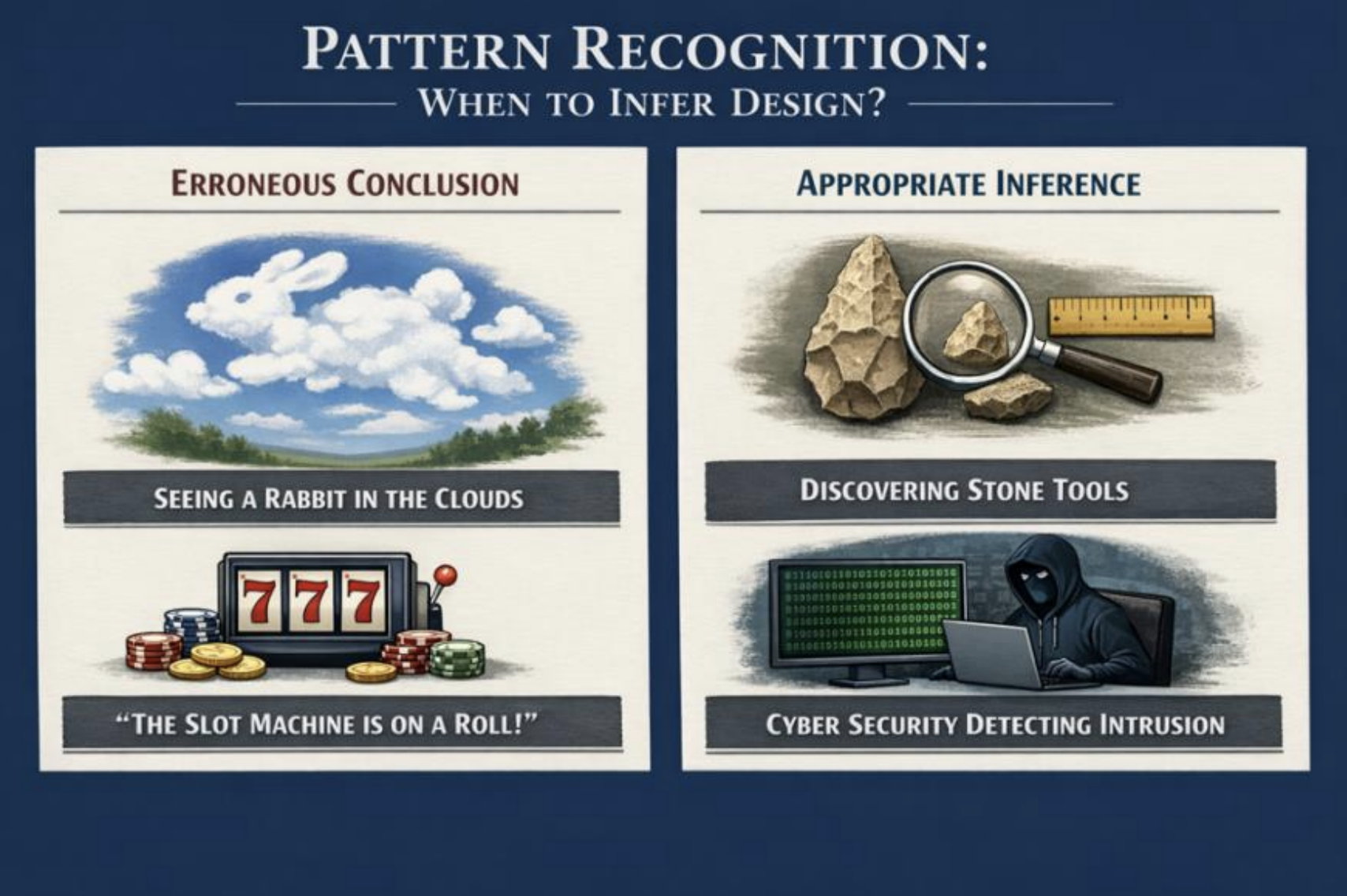 These cases show why teleological thinking resurfaces in debates about life’s functional order:
moving from patterned structure to purposive cause can be rational when constrained by
background knowledge, competing hypotheses, and tests separating genuine signature patterns
from regularities nature produces independently.
## Darwin’s Breakthrough: Rethinking Evolutionary Change and Adaptation
By the time Darwin penned his theory of evolution, European debates about order and design
had been reshaped by Enlightenment ideals of reason, public evidence, and intellectual
autonomy. Natural theology did not disappear, but it increasingly had to defend its claims in
broadly accessible terms rather than by appeal to ecclesial authority alone. This encouraged
discussions grounded in shared experience, empirical regularities, and the apparent intelligibility
of the world. At the same time, critiques of “occult” explanations and the growing prestige of
mechanistic, law-based accounts narrowed the space for explanations that relied directly on final
causes or special acts. Theology often responded by emphasizing a creator as legislator,
grounding the stability of natural laws, while treating design as readable in the general order of
nature rather than in ad hoc intervention.
Against that background, Darwin’s theory of natural selection altered the argumentative
landscape. Rather than denying that organisms look designed, Darwin offered a mechanism that
can generate adaptive fit without foresight. Variation, heritability, and differential reproductive
success produce cumulative change, and over long spans this can yield elaborate systems whose
parts appear coordinated for survival and reproduction. This shift matters epistemically because
it provides what design arguments often lacked: a detailed pathway from simpler antecedents to
complex outcomes, constrained by observable processes. Once such a pathway exists, the
inference from apparent design to an intelligent cause loses credibility. It becomes a comparative
question about explanatory performance, measured by evidential fit, breadth, and integration
with adjacent fields such as genetics, ecology, and developmental biology.
Richard Dawkins later crystallized this tension with his provocative phrase “the blind
watchmaker” stressing that natural selection can mimic the outputs of purposeful design without
being guided by intention; the phrase is contentious, but it marks a substantive claim that
evolutionary theory offers a non-intentional process with enough creative capacity, under
plausible conditions, to account for many appearances that earlier supported design inference.
The Darwinian Pathway to Complex Organization
Darwinian explanation begins from a simple premise: populations vary, some variation is
heritable, and organisms differ in reproductive success. From these elements, natural selection
follows as a cumulative filter, steadily increasing the frequency of traits that confer advantages in
particular environments. The process involves no foresight, yet it can yield remarkably
coordinated outcomes because each step is retained only insofar as it works locally. Selection is
therefore both constrained and opportunistic: constrained by available variation and by
developmental, physiological, and ecological limits, yet opportunistic in its ability to assemble
novelty from what already exists.
Complexity, in this view, is not a single property that arrives all at once; it is a historical product
of incremental modification, functional shifts, and the recombination of parts. Minor
improvements can accumulate into tightly integrated systems, while co-option can recruit traits
that originally served different roles. Gene duplication and divergence expand the search space
by freeing one copy to explore new functions. Over time, selection can deepen integration among
parts, transforming initially loose associations into interdependent networks.
A Darwinian account also benefits from distinguishing kinds of complexity that are often blurred
together. Structural complexity can mean mere intricacy, many parts and interactions, without
implying purposeful organization. Functional complexity refers to reliable performance, in which
components are organized to carry out a task consistently despite ordinary randomness and
perturbations. Evolutionary theory expects both, but it treats functional organization as especially
likely where selection repeatedly rewards performance and stabilizes improvements, which helps
explain why living systems often display regulation, redundancy, error correction, and adaptive
responsiveness. Such features can sound “engineered” in ordinary speech, yet they are also the
sort of properties that selection tends to preserve when reliability is advantageous.
## Modern Intelligent Design Movement and Its Core Claims
Emerging in the late twentieth century, the modern Intelligent Design (ID) movement represents
a strategic effort to reframe design reasoning as an evidentiary inference rather than a theological
deduction. Unlike earlier teleological arguments or natural theology, which often operated as
metaphysical commentaries on nature, modern ID aims to establish ‘design’ as an empirically
detectable feature of the physical world.
The movement’s core premise is that recognizing intelligence is already a standard scientific
practice in fields such as forensics, cryptography, and SETI. Proponents argue that biology
should be subject to the same explanatory filter used in these domains, which distinguishes
between effects caused by natural laws, random chance, and directed agency. By applying this
filter to biological systems, ID proponents contend that the third category, intelligent causation,
best explains certain features. Crucially, by treating the designer as an abstract agent and setting
aside questions of religious identity, the movement seeks to shift the controversy from the
identity of the cause to the detectability of the effect.
The movement’s ideology centers on the concept of information as a distinct ontological category
that cannot be reduced to matter or energy. The basic framework asserts that functional complex
systems possess a quality that natural selection cannot mimic. This is codified in two primary
arguments:
Irreducible Complexity: This biological argument states that certain molecular formations consist
of multiple, interacting parts, all of which are necessary for the function to exist. A system is said
to be irreducibly complex if it consists of numerous well-matched interacting parts that jointly
perform a basic function, such that removing any key part causes loss of that function. The
intended inference is historical: because the system requires all its parts to perform its current
function, a gradual evolutionary pathway is unlikely, since intermediate stages would be non-
functional and therefore would not confer a selectable advantage for natural selection to
preserve.
These cases show why teleological thinking resurfaces in debates about life’s functional order:
moving from patterned structure to purposive cause can be rational when constrained by
background knowledge, competing hypotheses, and tests separating genuine signature patterns
from regularities nature produces independently.
## Darwin’s Breakthrough: Rethinking Evolutionary Change and Adaptation
By the time Darwin penned his theory of evolution, European debates about order and design
had been reshaped by Enlightenment ideals of reason, public evidence, and intellectual
autonomy. Natural theology did not disappear, but it increasingly had to defend its claims in
broadly accessible terms rather than by appeal to ecclesial authority alone. This encouraged
discussions grounded in shared experience, empirical regularities, and the apparent intelligibility
of the world. At the same time, critiques of “occult” explanations and the growing prestige of
mechanistic, law-based accounts narrowed the space for explanations that relied directly on final
causes or special acts. Theology often responded by emphasizing a creator as legislator,
grounding the stability of natural laws, while treating design as readable in the general order of
nature rather than in ad hoc intervention.
Against that background, Darwin’s theory of natural selection altered the argumentative
landscape. Rather than denying that organisms look designed, Darwin offered a mechanism that
can generate adaptive fit without foresight. Variation, heritability, and differential reproductive
success produce cumulative change, and over long spans this can yield elaborate systems whose
parts appear coordinated for survival and reproduction. This shift matters epistemically because
it provides what design arguments often lacked: a detailed pathway from simpler antecedents to
complex outcomes, constrained by observable processes. Once such a pathway exists, the
inference from apparent design to an intelligent cause loses credibility. It becomes a comparative
question about explanatory performance, measured by evidential fit, breadth, and integration
with adjacent fields such as genetics, ecology, and developmental biology.
Richard Dawkins later crystallized this tension with his provocative phrase “the blind
watchmaker” stressing that natural selection can mimic the outputs of purposeful design without
being guided by intention; the phrase is contentious, but it marks a substantive claim that
evolutionary theory offers a non-intentional process with enough creative capacity, under
plausible conditions, to account for many appearances that earlier supported design inference.
The Darwinian Pathway to Complex Organization
Darwinian explanation begins from a simple premise: populations vary, some variation is
heritable, and organisms differ in reproductive success. From these elements, natural selection
follows as a cumulative filter, steadily increasing the frequency of traits that confer advantages in
particular environments. The process involves no foresight, yet it can yield remarkably
coordinated outcomes because each step is retained only insofar as it works locally. Selection is
therefore both constrained and opportunistic: constrained by available variation and by
developmental, physiological, and ecological limits, yet opportunistic in its ability to assemble
novelty from what already exists.
Complexity, in this view, is not a single property that arrives all at once; it is a historical product
of incremental modification, functional shifts, and the recombination of parts. Minor
improvements can accumulate into tightly integrated systems, while co-option can recruit traits
that originally served different roles. Gene duplication and divergence expand the search space
by freeing one copy to explore new functions. Over time, selection can deepen integration among
parts, transforming initially loose associations into interdependent networks.
A Darwinian account also benefits from distinguishing kinds of complexity that are often blurred
together. Structural complexity can mean mere intricacy, many parts and interactions, without
implying purposeful organization. Functional complexity refers to reliable performance, in which
components are organized to carry out a task consistently despite ordinary randomness and
perturbations. Evolutionary theory expects both, but it treats functional organization as especially
likely where selection repeatedly rewards performance and stabilizes improvements, which helps
explain why living systems often display regulation, redundancy, error correction, and adaptive
responsiveness. Such features can sound “engineered” in ordinary speech, yet they are also the
sort of properties that selection tends to preserve when reliability is advantageous.
## Modern Intelligent Design Movement and Its Core Claims
Emerging in the late twentieth century, the modern Intelligent Design (ID) movement represents
a strategic effort to reframe design reasoning as an evidentiary inference rather than a theological
deduction. Unlike earlier teleological arguments or natural theology, which often operated as
metaphysical commentaries on nature, modern ID aims to establish ‘design’ as an empirically
detectable feature of the physical world.
The movement’s core premise is that recognizing intelligence is already a standard scientific
practice in fields such as forensics, cryptography, and SETI. Proponents argue that biology
should be subject to the same explanatory filter used in these domains, which distinguishes
between effects caused by natural laws, random chance, and directed agency. By applying this
filter to biological systems, ID proponents contend that the third category, intelligent causation,
best explains certain features. Crucially, by treating the designer as an abstract agent and setting
aside questions of religious identity, the movement seeks to shift the controversy from the
identity of the cause to the detectability of the effect.
The movement’s ideology centers on the concept of information as a distinct ontological category
that cannot be reduced to matter or energy. The basic framework asserts that functional complex
systems possess a quality that natural selection cannot mimic. This is codified in two primary
arguments:
Irreducible Complexity: This biological argument states that certain molecular formations consist
of multiple, interacting parts, all of which are necessary for the function to exist. A system is said
to be irreducibly complex if it consists of numerous well-matched interacting parts that jointly
perform a basic function, such that removing any key part causes loss of that function. The
intended inference is historical: because the system requires all its parts to perform its current
function, a gradual evolutionary pathway is unlikely, since intermediate stages would be non-
functional and therefore would not confer a selectable advantage for natural selection to
preserve.
 Intelligent Design proponents illustrate irreducible complexity with a mousetrap, which requires
five components - base plate, spring, hammer, holding bar, and catch - arranged such that
removing any single part renders it non-functional. Applied to biology, the argument claims that
evolutionary precursors to such systems would be non-functional and therefore could not have
been favored by natural selection. However, critics often point out that a system lacking one
component, while unable to perform its current function, may still perform a different, simpler
function that could have been advantageous to ancestors, making it a viable evolutionary
precursor.
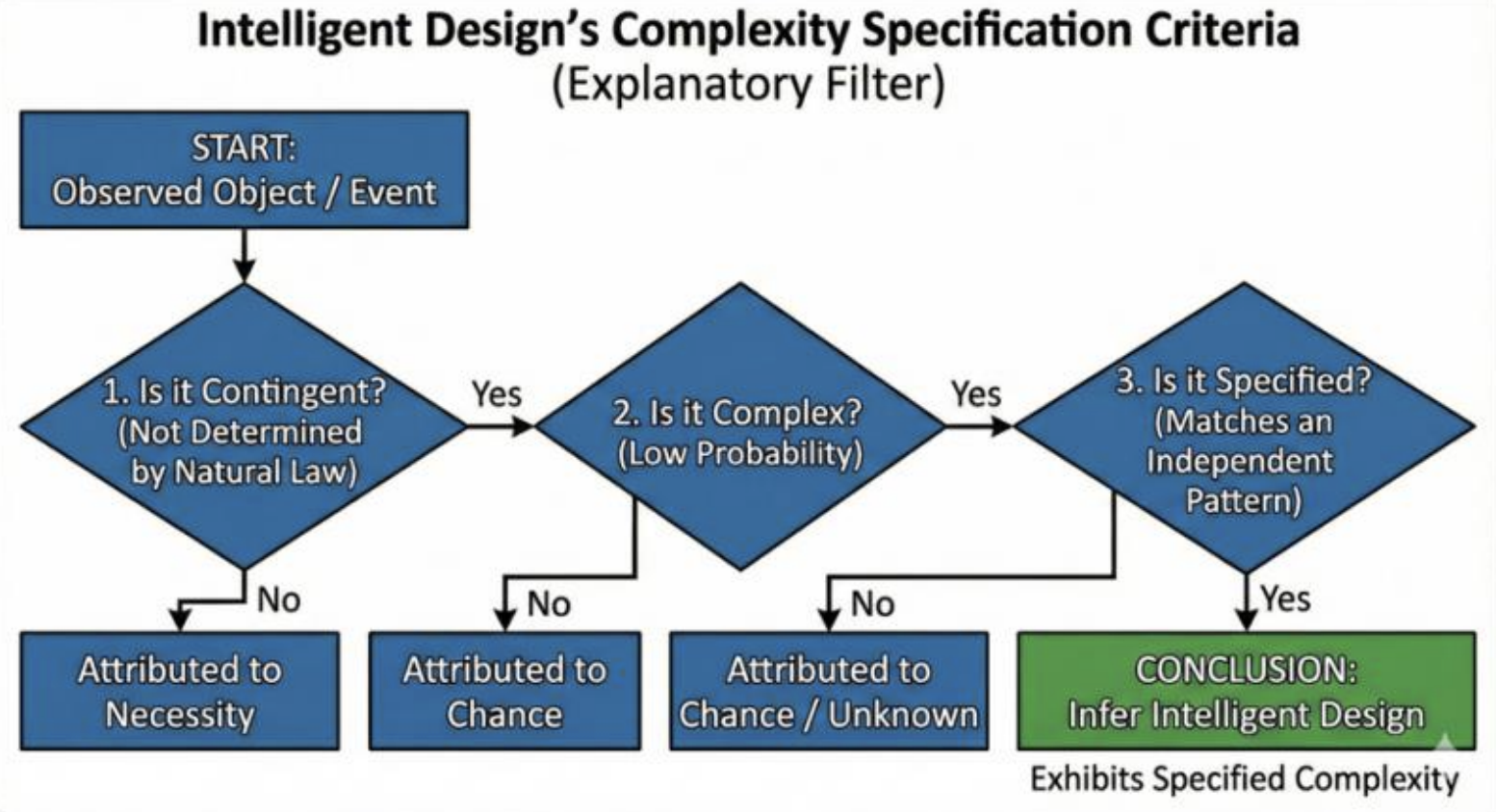
Specified Complexity: Specified Complexity Information (CSI) is a mathematical framework that
aims to detect design by combining low probability with an independently defined pattern. Since
many outcomes are unlikely without implying agency, CSI argues that design is supported only
when an outcome is both highly improbable under a relevant chance hypothesis and “specified,”
meaning it matches a pattern set independently of the result. This specification requirement is
intended to prevent picking the target after seeing the data, which can make almost any outcome
look significant. In the explanatory filter, the inference proceeds in steps: determine whether the
event is contingent rather than necessary, whether it exceeds a complexity threshold, and
whether it is independently specified; only then does the filter yield design rather than necessity
or chance.
Intelligent Design proponents illustrate irreducible complexity with a mousetrap, which requires
five components - base plate, spring, hammer, holding bar, and catch - arranged such that
removing any single part renders it non-functional. Applied to biology, the argument claims that
evolutionary precursors to such systems would be non-functional and therefore could not have
been favored by natural selection. However, critics often point out that a system lacking one
component, while unable to perform its current function, may still perform a different, simpler
function that could have been advantageous to ancestors, making it a viable evolutionary
precursor.
Specified Complexity: Specified Complexity Information (CSI) is a mathematical framework that
aims to detect design by combining low probability with an independently defined pattern. Since
many outcomes are unlikely without implying agency, CSI argues that design is supported only
when an outcome is both highly improbable under a relevant chance hypothesis and “specified,”
meaning it matches a pattern set independently of the result. This specification requirement is
intended to prevent picking the target after seeing the data, which can make almost any outcome
look significant. In the explanatory filter, the inference proceeds in steps: determine whether the
event is contingent rather than necessary, whether it exceeds a complexity threshold, and
whether it is independently specified; only then does the filter yield design rather than necessity
or chance.
 A concrete illustration of complex specified information comes from cybersecurity incident
response. Suppose monitoring captures two equal-length network payload strings: one is high-
entropy noise consistent with compressed traffic; the other contains structured patterns matching
a known command-and-control beacon format from prior threat reports. Both strings are highly
improbable, so rarity alone doesn’t distinguish benign from malicious. CSI reasoning depends on
specification: the suspicious string matches an independently defined pattern class, described
before capture, and compactly expressible. Given realistic generative models, malware produces
such beacons while random traffic is unlikely to. Evidential force lies in this conjunction, not
rarity alone.
Challenging Methodological Naturalism: A central feature of science is methodological
naturalism, explaining natural phenomena through publicly testable causes. Intelligent Design
challenges this principle, arguing that restricting explanations to material causes arbitrarily
excludes intelligent causation. ID theorists contend that methodological naturalism functions as
dogma rather than justified methodology, and they seek to expand scientific explanation to
include non-material agency. Thus, ID represents not merely a dispute about biological
mechanisms, but a fundamental disagreement about the epistemic rules governing explanations
of complex origins.
Where Intelligent Design Falls Short
Most philosophers of science and biologists reject Intelligent Design not for logical incoherence,
but for lacking the epistemic virtues of productive scientific explanations. Successful hypotheses
constrain outcomes, specify testable mechanisms, and generate falsifiable predictions. Intelligent
Design suffers from under-constraint: claiming “an intelligent cause produced this”
accommodates virtually any biological pattern without identifying the designer’s capacities,
constraints, or empirical signatures. Such broad compatibility prevents meaningful
discrimination from competing explanations.
A second weakness is a narrow mechanistic view of evolution. Evolutionary theory offers
extensive testable mechanisms: natural selection, drift, duplication, co-option, and
developmental constraint; integrating coherently across biological levels. ID arguments typically
stop at attributing design without elaborating investigable causal pathways. While stimulating
debate, Intelligent Design has produced few distinctive research trajectories that have yielded
empirical discoveries attributable to design rather than evolutionary processes.
Intelligent Design’s signature concepts face inferential difficulties. Irreducible complexity
arguments infer historical impossibility from present functional features. Yet, critics note that
evolutionary pathways operate through functional shifts, redundancy, scaffolding, and co-option,
allowing selectable intermediates that don’t perform the final function. Complex specified
information arguments depend on independent specification and realistic alternative models, but
often fail on both counts. Intuitions about probability usually err when evolution is misconceived
as purely random sampling, leading to complex outcomes being deemed astronomically unlikely.
This misses the Darwinian point: natural selection is a non-random filter that retains beneficial
traits and eliminates deleterious ones. The epistemic question shifts from computing the one-step
assembly probability to assessing whether credible stepwise routes exist in which intermediates
function adequately.
A related shortcoming is treating rarity as evidence of special causation. Any particular sequence
is exceedingly improbable beforehand, so rarity alone carries little weight. When “chance
hypotheses” misconstrue evolution as random sampling or specifications are determined post
hoc, probability calculations mislead rather than compare realistic causal models. Defensible
design inference requires independently specified patterns, not mere improbability. Evolutionary
inquiry, therefore, reconstructs mechanisms and pathways, seeking signatures of incremental
adaptation: trade-offs, constraints, vestigial features, and imperfect solutions that mark
selection’s cumulative work.
Intelligent Design’s argumentative structure operates largely negatively, critiquing evolutionary
gaps. But identifying one framework’s incompleteness doesn’t establish an alternative.
Competing hypotheses require independent evidential support and predictive leverage. Without
this, “design” becomes a retreating placeholder, explaining why critics deem the Intelligent
Design methodologically unproductive.
A concrete illustration of complex specified information comes from cybersecurity incident
response. Suppose monitoring captures two equal-length network payload strings: one is high-
entropy noise consistent with compressed traffic; the other contains structured patterns matching
a known command-and-control beacon format from prior threat reports. Both strings are highly
improbable, so rarity alone doesn’t distinguish benign from malicious. CSI reasoning depends on
specification: the suspicious string matches an independently defined pattern class, described
before capture, and compactly expressible. Given realistic generative models, malware produces
such beacons while random traffic is unlikely to. Evidential force lies in this conjunction, not
rarity alone.
Challenging Methodological Naturalism: A central feature of science is methodological
naturalism, explaining natural phenomena through publicly testable causes. Intelligent Design
challenges this principle, arguing that restricting explanations to material causes arbitrarily
excludes intelligent causation. ID theorists contend that methodological naturalism functions as
dogma rather than justified methodology, and they seek to expand scientific explanation to
include non-material agency. Thus, ID represents not merely a dispute about biological
mechanisms, but a fundamental disagreement about the epistemic rules governing explanations
of complex origins.
Where Intelligent Design Falls Short
Most philosophers of science and biologists reject Intelligent Design not for logical incoherence,
but for lacking the epistemic virtues of productive scientific explanations. Successful hypotheses
constrain outcomes, specify testable mechanisms, and generate falsifiable predictions. Intelligent
Design suffers from under-constraint: claiming “an intelligent cause produced this”
accommodates virtually any biological pattern without identifying the designer’s capacities,
constraints, or empirical signatures. Such broad compatibility prevents meaningful
discrimination from competing explanations.
A second weakness is a narrow mechanistic view of evolution. Evolutionary theory offers
extensive testable mechanisms: natural selection, drift, duplication, co-option, and
developmental constraint; integrating coherently across biological levels. ID arguments typically
stop at attributing design without elaborating investigable causal pathways. While stimulating
debate, Intelligent Design has produced few distinctive research trajectories that have yielded
empirical discoveries attributable to design rather than evolutionary processes.
Intelligent Design’s signature concepts face inferential difficulties. Irreducible complexity
arguments infer historical impossibility from present functional features. Yet, critics note that
evolutionary pathways operate through functional shifts, redundancy, scaffolding, and co-option,
allowing selectable intermediates that don’t perform the final function. Complex specified
information arguments depend on independent specification and realistic alternative models, but
often fail on both counts. Intuitions about probability usually err when evolution is misconceived
as purely random sampling, leading to complex outcomes being deemed astronomically unlikely.
This misses the Darwinian point: natural selection is a non-random filter that retains beneficial
traits and eliminates deleterious ones. The epistemic question shifts from computing the one-step
assembly probability to assessing whether credible stepwise routes exist in which intermediates
function adequately.
A related shortcoming is treating rarity as evidence of special causation. Any particular sequence
is exceedingly improbable beforehand, so rarity alone carries little weight. When “chance
hypotheses” misconstrue evolution as random sampling or specifications are determined post
hoc, probability calculations mislead rather than compare realistic causal models. Defensible
design inference requires independently specified patterns, not mere improbability. Evolutionary
inquiry, therefore, reconstructs mechanisms and pathways, seeking signatures of incremental
adaptation: trade-offs, constraints, vestigial features, and imperfect solutions that mark
selection’s cumulative work.
Intelligent Design’s argumentative structure operates largely negatively, critiquing evolutionary
gaps. But identifying one framework’s incompleteness doesn’t establish an alternative.
Competing hypotheses require independent evidential support and predictive leverage. Without
this, “design” becomes a retreating placeholder, explaining why critics deem the Intelligent
Design methodologically unproductive.
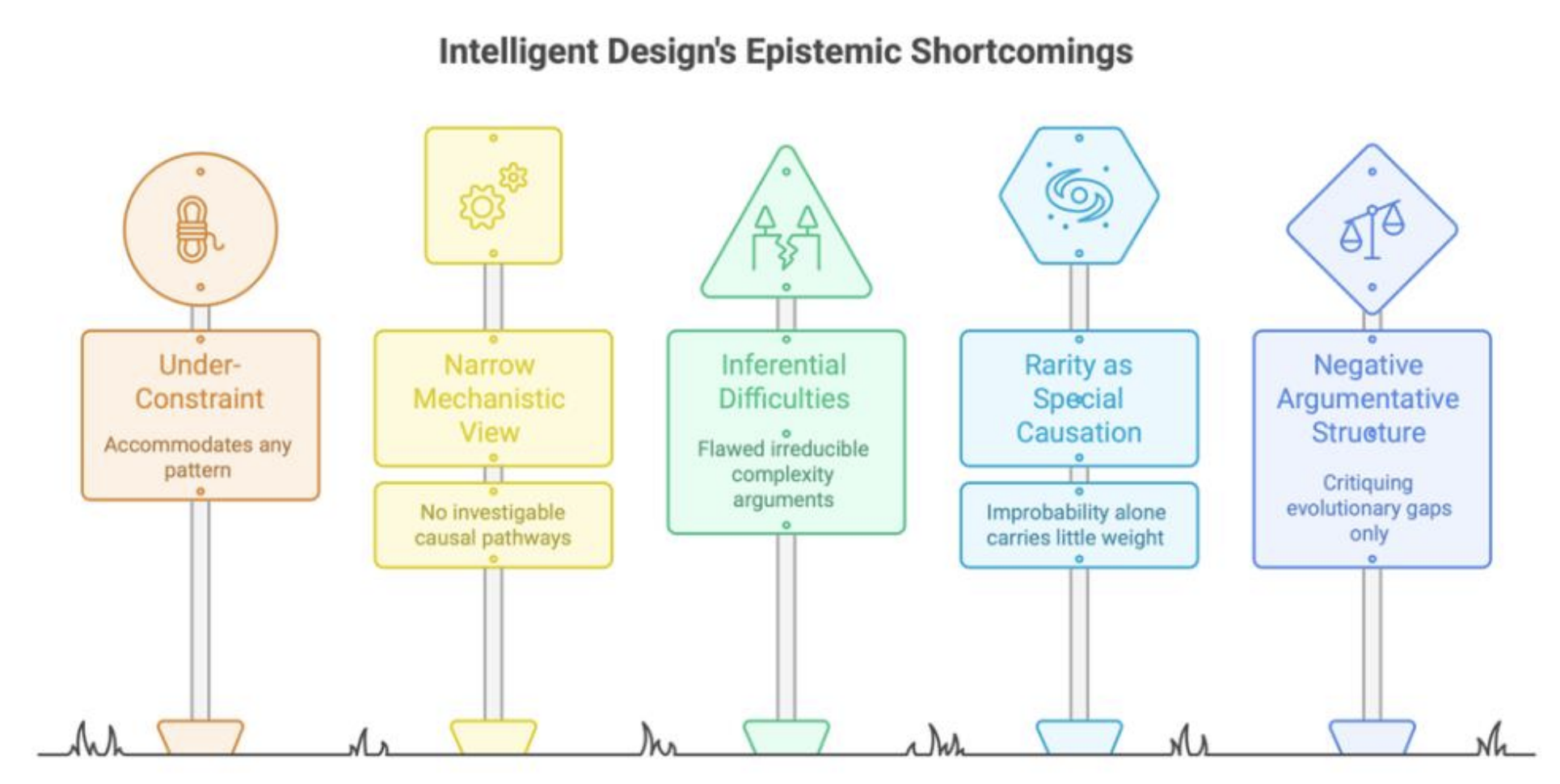 ## ‘Abdu’l-Bahá and the Reframing of Design, Complexity, and Free Will
Across his talks, tablets, and correspondence, ‘Abdu’l-Bahá repeatedly engages questions central
to contemporary intelligent design debates, addressing purposiveness in nature, the emergence of
organized complexity, and human volition. Remarkably, several ideas that later became
foundational to the Intelligent Design Movement appear in his discourse many decades before.
This essay does not claim a one-to-one correspondence between ‘Abdu’l-Bahá and contemporary
ID frameworks; its aim is strictly analytic, identifying possible points of conceptual convergence
and examining their implications.
‘Abdu’l-Bahá’s Design Decision Criteria
At the heart of Intelligent Design’s complexity-specification criteria lies a procedure addressing
three fundamental questions: should we attribute an event or the formation of an entity to
necessity , chance, or design? ‘Abdu’l-Bahá, in his tablet to August Forel, has indicated a similar
decision criterion.
“Now, formation is of three kinds and of three kinds only: accidental, necessary and voluntary.
The coming together of the various constituent elements of beings cannot be accidental, for unto
every effect there must be a cause. It cannot be compulsory, for then the formation must be an
inherent property of the constituent parts and the inherent property of a thing can in no wise be
dissociated from it..Thus under such circumstances the decomposition of any formation is
impossible, for the inherent properties of a thing cannot be separated from it. The third
formation remaineth and that is the voluntary one, that is, an unseen force described as the
Ancient Power, causeth these elements to come together, every formation giving rise to a distinct
being.” [1]
The core claim of irreducible complexity in ID is that some systems consist of multiple, tightly
coordinated, interacting parts that jointly enable a basic function, such that removing any one
part causes the system to lose that function. ‘Abdu’l-Bahá has reiterated this concept decades
before.
“For instance, as we have observed, co-operation among the constituent parts of the human body
is clearly established, and these parts and members render services unto all the component parts
of the body.. Likewise every arrangement and formation that is not perfect in its order we
designate as accidental, and that which is orderly, regular, perfect in its relations and every part
of which is in its proper place and is the essential requisite of the other constituent parts, this we
call a composition formed through will and knowledge.” [2]
The apparent overlap between ‘Abdu’l-Bahá’s statements and key themes in the Intelligent
Design framework raises a critical question:
Does the Bahá’í approach offer a genuinely distinctive account of design, or does it inherit the
same conceptual and philosophical weaknesses often attributed to the Intelligent Design
movement?
Bahá’í Paradigm Shift: Behavior Trumps Structure
The distinction of the Bahá’í approach lies in a crucial additional component that ‘Abdu’l-Bahá
consistently emphasizes. Integrating this element fundamentally transforms ‘Abdu’l-Bahá’s
treatment of design, complexity, and free will into a distinctive philosophical framework that
addresses many of the criticisms of the Intelligent Design movement.
‘Abdu’l-Bahá’s Tablet to Auguste Forel offers a clear window into his reasoning about intelligent
causation. Before engaging themes that resemble irreducible complexity or other design-oriented
ideas, he begins from a radically different starting point: humanity’s distinctive manner of
interacting with nature. He offers concrete examples to show that the human intellect does not
merely submit to natural forces but can discover their regularities and deliberately redirect them
toward chosen ends.
“Consider: according to the law of nature man liveth, moveth and hath his being on earth, yet his
soul and mind interfere with the laws thereof, and even as the bird he flieth in the air, saileth
speedily upon the seas and as the fish soundeth the deep and discovereth the things therein.
Verily this is a grievous defeat inflicted upon the laws of nature.” [3]
This starting line of argument reframes what “design” is taken to mean. Instead of drawing a
verdict solely from the arrangement of parts in a finished structure, ‘Abdu’l-Bahá adds a second
dimension centered on what an entity can do relative to nature’s constraints. Alongside a
configuration-based analysis of organized forms, he introduces a behavior-based component that
emphasizes capacities, agency, and modes of lawful interaction. The implications are substantial:
the focus shifts from static features to dynamic powers and patterns of action, and the evidential
standard becomes more observer-independent. Because the laws of nature are taken to be
invariant across the universe, modes of interaction with those laws supply a universal reference
point that, in principle, any competent observer, anywhere, could recognize and assess.
Astronomy offers a helpful analogy. To distinguish an alien craft from a comet, composition
alone may be unclear; what matters is behavior under natural law. Astronomers examine
trajectories and accelerations to see whether motion matches gravity and typical outgassing.
Because these regularities supply a shared reference for any observer, anomaly detection often
prioritizes law-governed behavior over structural description.
## ‘Abdu’l-Bahá and the Reframing of Design, Complexity, and Free Will
Across his talks, tablets, and correspondence, ‘Abdu’l-Bahá repeatedly engages questions central
to contemporary intelligent design debates, addressing purposiveness in nature, the emergence of
organized complexity, and human volition. Remarkably, several ideas that later became
foundational to the Intelligent Design Movement appear in his discourse many decades before.
This essay does not claim a one-to-one correspondence between ‘Abdu’l-Bahá and contemporary
ID frameworks; its aim is strictly analytic, identifying possible points of conceptual convergence
and examining their implications.
‘Abdu’l-Bahá’s Design Decision Criteria
At the heart of Intelligent Design’s complexity-specification criteria lies a procedure addressing
three fundamental questions: should we attribute an event or the formation of an entity to
necessity , chance, or design? ‘Abdu’l-Bahá, in his tablet to August Forel, has indicated a similar
decision criterion.
“Now, formation is of three kinds and of three kinds only: accidental, necessary and voluntary.
The coming together of the various constituent elements of beings cannot be accidental, for unto
every effect there must be a cause. It cannot be compulsory, for then the formation must be an
inherent property of the constituent parts and the inherent property of a thing can in no wise be
dissociated from it..Thus under such circumstances the decomposition of any formation is
impossible, for the inherent properties of a thing cannot be separated from it. The third
formation remaineth and that is the voluntary one, that is, an unseen force described as the
Ancient Power, causeth these elements to come together, every formation giving rise to a distinct
being.” [1]
The core claim of irreducible complexity in ID is that some systems consist of multiple, tightly
coordinated, interacting parts that jointly enable a basic function, such that removing any one
part causes the system to lose that function. ‘Abdu’l-Bahá has reiterated this concept decades
before.
“For instance, as we have observed, co-operation among the constituent parts of the human body
is clearly established, and these parts and members render services unto all the component parts
of the body.. Likewise every arrangement and formation that is not perfect in its order we
designate as accidental, and that which is orderly, regular, perfect in its relations and every part
of which is in its proper place and is the essential requisite of the other constituent parts, this we
call a composition formed through will and knowledge.” [2]
The apparent overlap between ‘Abdu’l-Bahá’s statements and key themes in the Intelligent
Design framework raises a critical question:
Does the Bahá’í approach offer a genuinely distinctive account of design, or does it inherit the
same conceptual and philosophical weaknesses often attributed to the Intelligent Design
movement?
Bahá’í Paradigm Shift: Behavior Trumps Structure
The distinction of the Bahá’í approach lies in a crucial additional component that ‘Abdu’l-Bahá
consistently emphasizes. Integrating this element fundamentally transforms ‘Abdu’l-Bahá’s
treatment of design, complexity, and free will into a distinctive philosophical framework that
addresses many of the criticisms of the Intelligent Design movement.
‘Abdu’l-Bahá’s Tablet to Auguste Forel offers a clear window into his reasoning about intelligent
causation. Before engaging themes that resemble irreducible complexity or other design-oriented
ideas, he begins from a radically different starting point: humanity’s distinctive manner of
interacting with nature. He offers concrete examples to show that the human intellect does not
merely submit to natural forces but can discover their regularities and deliberately redirect them
toward chosen ends.
“Consider: according to the law of nature man liveth, moveth and hath his being on earth, yet his
soul and mind interfere with the laws thereof, and even as the bird he flieth in the air, saileth
speedily upon the seas and as the fish soundeth the deep and discovereth the things therein.
Verily this is a grievous defeat inflicted upon the laws of nature.” [3]
This starting line of argument reframes what “design” is taken to mean. Instead of drawing a
verdict solely from the arrangement of parts in a finished structure, ‘Abdu’l-Bahá adds a second
dimension centered on what an entity can do relative to nature’s constraints. Alongside a
configuration-based analysis of organized forms, he introduces a behavior-based component that
emphasizes capacities, agency, and modes of lawful interaction. The implications are substantial:
the focus shifts from static features to dynamic powers and patterns of action, and the evidential
standard becomes more observer-independent. Because the laws of nature are taken to be
invariant across the universe, modes of interaction with those laws supply a universal reference
point that, in principle, any competent observer, anywhere, could recognize and assess.
Astronomy offers a helpful analogy. To distinguish an alien craft from a comet, composition
alone may be unclear; what matters is behavior under natural law. Astronomers examine
trajectories and accelerations to see whether motion matches gravity and typical outgassing.
Because these regularities supply a shared reference for any observer, anomaly detection often
prioritizes law-governed behavior over structural description.
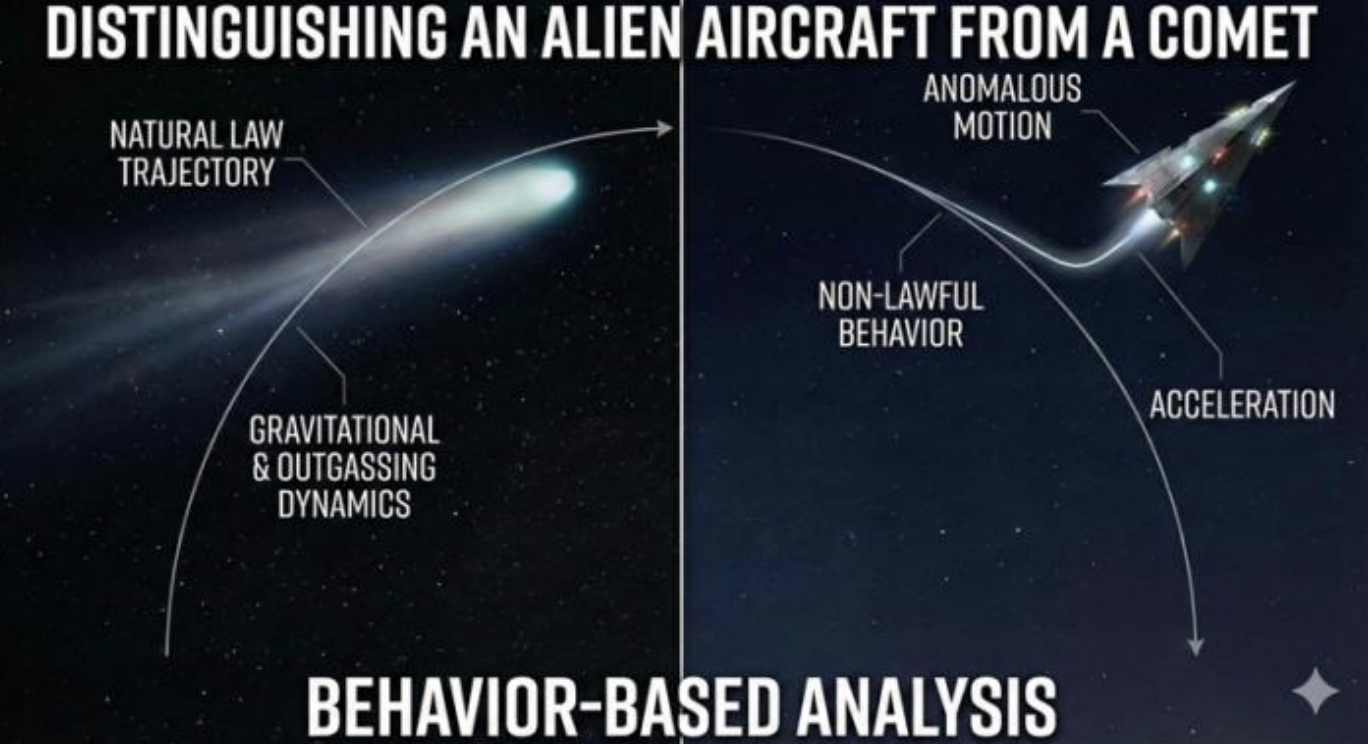 The Intelligent Design movement, by contrast, tends to concentrate on the arrangement and
coordination of molecular components and organismal structures, for example, pointing to
intricate biochemical machinery or the tightly coupled organization found across diverse life
forms. By contrast, Darwinian theory largely explains how natural selection and other natural
laws shape organisms over time. Still, it offers a thinner account of how the organism, once
formed, can actively engage, harness, or redirect those same laws in its own behavior.
Measuring Complexity by Interaction, Not Intricacy
Intelligent Design discussions often treat “complexity” and “function” as if their meaning were
self-evident, yet the criteria are frequently underspecified. A structure is labeled complex
because it looks intricate, and it is labeled functional because it appears to serve a purpose. This
approach is vulnerable to after-the-fact selection: once an outcome exists, observers can
highlight whichever features make it seem special, then infer significance from the highlighted
pattern. The problem is not that biological systems lack organization, but that the boundary
between “meaningful organization” and “mere arrangement” can shift with the observer’s
background assumptions.
This observer-dependence becomes clearer under a simple thought experiment. A biological
configuration that humans interpret as exquisitely coordinated might not register as “functionally
organized” to an extraterrestrial whose embodiment, sensory access, and biological architecture
differ radically from ours. If the alien’s categories of function are keyed to entirely different
substrates and constraints, many of our “salient” biological patterns could appear arbitrary or
even unintelligible. In that case, the inference is not tracking a foundational property of the
system alone, but a match between the system and the observer’s prior conceptual scheme.
Darwinian theory offers a more disciplined route for classifying function because it ties it to a
universal, testable criterion: differential contribution to survival and reproduction under specific
conditions. A trait’s function is not whatever an observer finds impressive; it is what the trait
does that selection can preserve, refine, or repurpose across generations. Complexity, in this
framework, is often described as the cumulative integration of multiple parts and processes
shaped by selection through gradual modification, co-option, and increasing interdependence.
Yet “complexity” remains vague and less tightly fixed than “function”: it can refer to the number
of parts, degree of interdependence, informational structure, or the length of an evolutionary
pathway, and these measures do not always align consistently.
‘Abdu’l-Bahá introduces an additional way to classify complexity that shifts attention from static
configuration to interaction with nature’s laws. In this narrative, the most important feature is not
only how parts are arranged, but how an entity can recognize, engage, and redirect regularities in
nature toward chosen ends. This behavior-centered criterion has a distinctive advantage: it leans
on the assumed universality of natural law. If the laws of nature are invariant for any competent
observer, then the capacity to understand and harness those laws offers a more observer-
independent reference point than judging what “looks designed” on structural grounds alone. In
that sense, ‘Abdu’l-Bahá’s framework proposes a generalizable, universally agreed upon measure
of complexity grounded in lawful constraint and responsive engagement with nature’s laws.
The Intelligent Design movement, by contrast, tends to concentrate on the arrangement and
coordination of molecular components and organismal structures, for example, pointing to
intricate biochemical machinery or the tightly coupled organization found across diverse life
forms. By contrast, Darwinian theory largely explains how natural selection and other natural
laws shape organisms over time. Still, it offers a thinner account of how the organism, once
formed, can actively engage, harness, or redirect those same laws in its own behavior.
Measuring Complexity by Interaction, Not Intricacy
Intelligent Design discussions often treat “complexity” and “function” as if their meaning were
self-evident, yet the criteria are frequently underspecified. A structure is labeled complex
because it looks intricate, and it is labeled functional because it appears to serve a purpose. This
approach is vulnerable to after-the-fact selection: once an outcome exists, observers can
highlight whichever features make it seem special, then infer significance from the highlighted
pattern. The problem is not that biological systems lack organization, but that the boundary
between “meaningful organization” and “mere arrangement” can shift with the observer’s
background assumptions.
This observer-dependence becomes clearer under a simple thought experiment. A biological
configuration that humans interpret as exquisitely coordinated might not register as “functionally
organized” to an extraterrestrial whose embodiment, sensory access, and biological architecture
differ radically from ours. If the alien’s categories of function are keyed to entirely different
substrates and constraints, many of our “salient” biological patterns could appear arbitrary or
even unintelligible. In that case, the inference is not tracking a foundational property of the
system alone, but a match between the system and the observer’s prior conceptual scheme.
Darwinian theory offers a more disciplined route for classifying function because it ties it to a
universal, testable criterion: differential contribution to survival and reproduction under specific
conditions. A trait’s function is not whatever an observer finds impressive; it is what the trait
does that selection can preserve, refine, or repurpose across generations. Complexity, in this
framework, is often described as the cumulative integration of multiple parts and processes
shaped by selection through gradual modification, co-option, and increasing interdependence.
Yet “complexity” remains vague and less tightly fixed than “function”: it can refer to the number
of parts, degree of interdependence, informational structure, or the length of an evolutionary
pathway, and these measures do not always align consistently.
‘Abdu’l-Bahá introduces an additional way to classify complexity that shifts attention from static
configuration to interaction with nature’s laws. In this narrative, the most important feature is not
only how parts are arranged, but how an entity can recognize, engage, and redirect regularities in
nature toward chosen ends. This behavior-centered criterion has a distinctive advantage: it leans
on the assumed universality of natural law. If the laws of nature are invariant for any competent
observer, then the capacity to understand and harness those laws offers a more observer-
independent reference point than judging what “looks designed” on structural grounds alone. In
that sense, ‘Abdu’l-Bahá’s framework proposes a generalizable, universally agreed upon measure
of complexity grounded in lawful constraint and responsive engagement with nature’s laws.
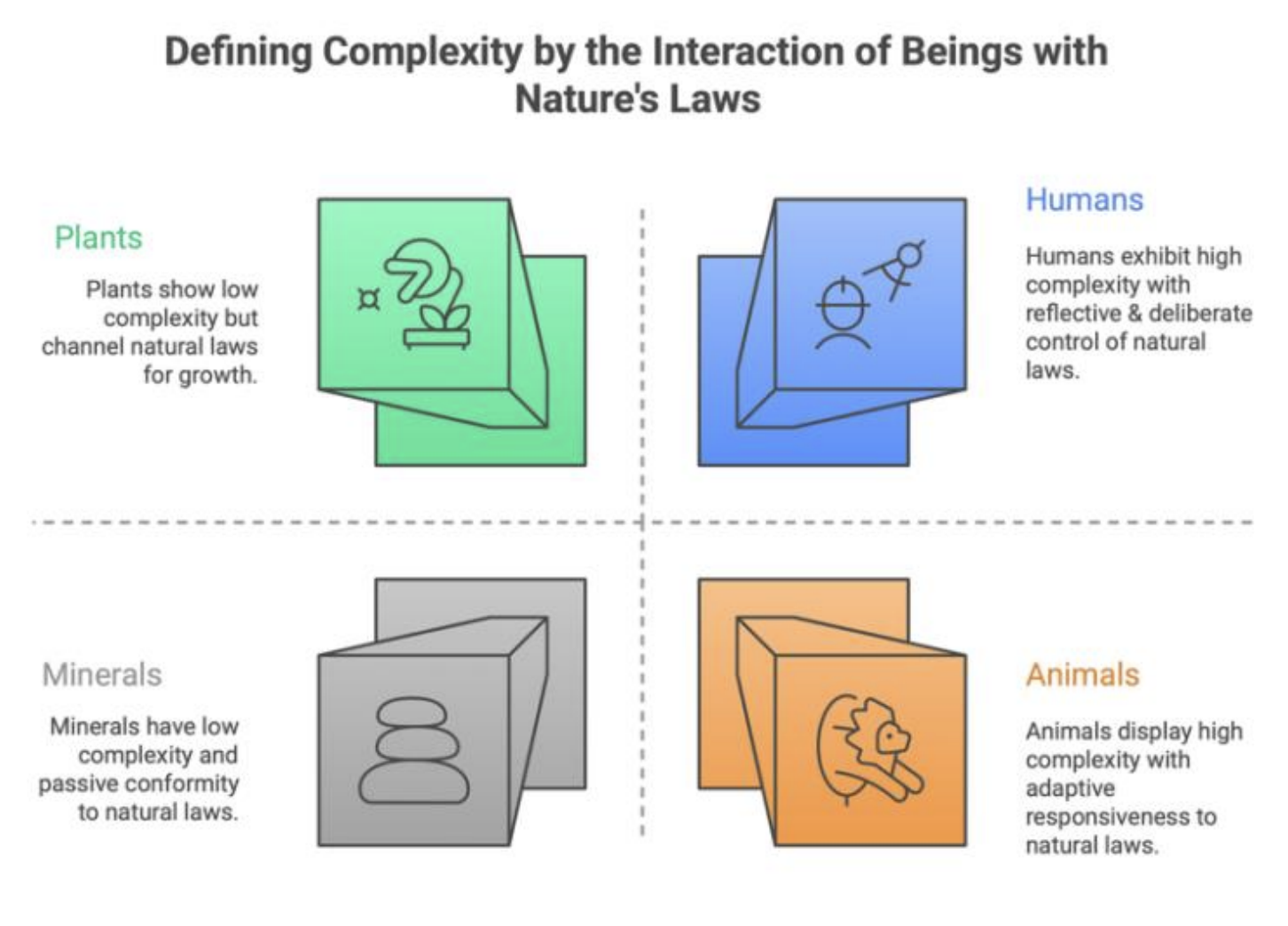
Hierarchical Complexity
A recurring limitation in both the Intelligent Design (ID) literature and standard Darwinian
presentations is that neither offers a fundamental, widely accepted way to sort “complexity” into
discrete hierarchical levels. ID typically treats complexity as a marker that triggers design
inference, but its criteria do not naturally yield a principled taxonomy of kinds or grades of
complexity. Darwinian accounts explain how complexity can accumulate historically, yet they
often treat “complexity” as a family of measures rather than a well-defined set of categories. By
contrast, the Bahá’í framework interpreted here offers a consistent basis for hierarchical
classification by grounding complexity in law-interaction capacities.
Aristotle’s biological writings offer a precedent for functional classification: minerals, plants,
animals, and humans are distinguished by characteristic powers rather than by mere physical
arrangement. Plants exhibit nutrition, growth, and reproduction. Animals add sensation, appetite,
and self-initiated motion. Humans add rational thought, deliberation, and purposive choice, so
each level is marked by what it can do.
‘Abdu’l-Bahá extends this template by asking how these biological powers position beings in
relation to nature’s law itself. Minerals display regularity under physical forces without using
those regularities toward ends. Plants channel natural regularities into growth and reproduction
without reflective awareness of the laws they express. Animals engage causal regularities
through perception, instinct, and flexible behavior, yet typically without an abstract grasp of
governing principles. Humans, on the other hand, formulate and test regularities, then redirect
their operation toward chosen purposes.
This can be framed as hierarchical complexity: higher forms add control layers that integrate and
govern lower-level processes. Plants exhibit a one-dimensional nested vertical growth, seemingly
defying gravity. Animals add a multi-level dynamic coordination and movement in all directions,
through sensation, nervous control, and locomotion. Humans add symbolic representation and
externalize it into artifacts that exploit natural law independently and externally to the body,
extending organized control into tools, machines, and engineered systems.
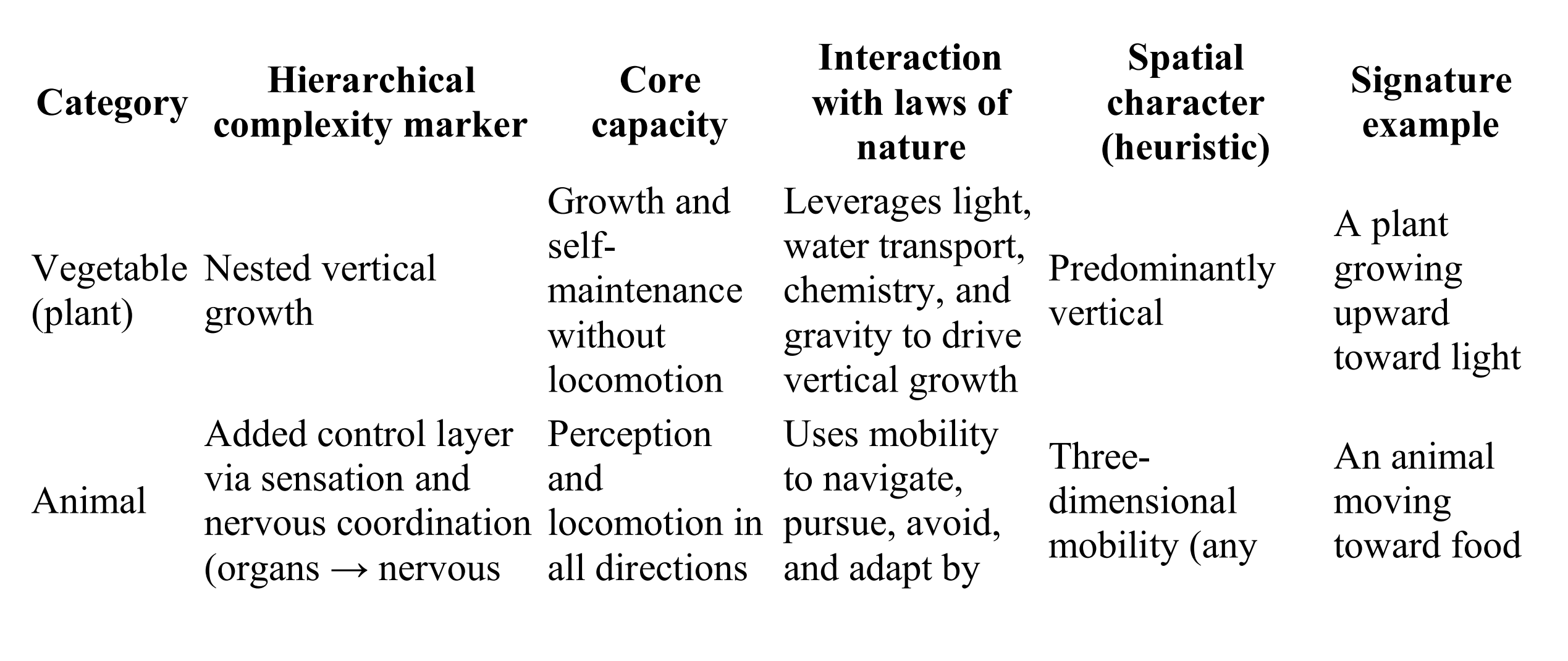
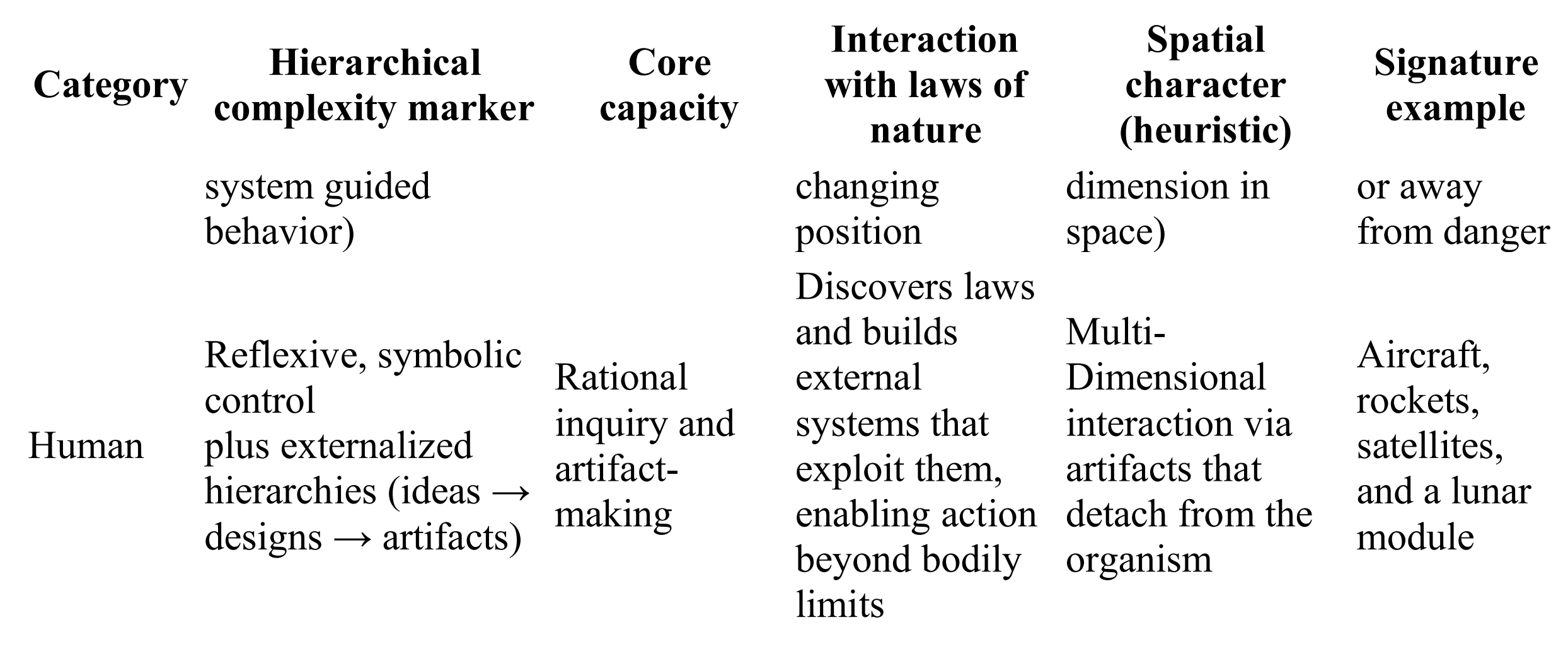 Together, these considerations suggest a methodological shift: rather than treating “complexity”
as whatever a particular audience happens to find unnatural, we should ask whether the criterion
for complexity and its division into different hierarchical categories holds across multiple
observers and is anchored in observer-independent standards.
## Free Will: Real or an Illusion?
A natural next step is to move from the complexity of structure and law-governed interaction to a
deeper question about agency:
How do we know we have free will, and how could we prove it?
The challenge is methodological. Introspection feels decisive, yet private conviction rarely
counts as public evidence. At the same time, outward behavior is observable, but many different
causes can generate behavior. If the aim is an account that any competent observer can assess,
the question becomes:
What observable markers would distinguish genuine agency from the appearance of choice
produced by other mechanisms?
One temptation is to treat unpredictability as proof of freedom of choice. If an entity’s behavior
cannot be predicted, one might infer that it has free will. But unpredictability is not enough. A
process can be unpredictable because it is driven by stochastic factors, hidden variables, and
chaotic sensitivity to initial conditions. Randomness can defeat prediction without adding
agency. An outcome that no one could foresee may still be the output of blind chance, or of
lawful dynamics too complex to track. So a test that rests only on failed prediction will
misclassify both random systems and opaque deterministic systems as “free.”
A second temptation moves the other way: some experiments report neural activity that precedes
a person’s conscious report of deciding, prompting skeptics to conclude that free will is illusory.
On this view, we experience deliberation, but the causal machinery is already completed before
awareness registers the choice. This interpretation risks rendering free will effectively
unfalsifiable, since any decision can be dismissed as post hoc awareness of a prior process.
This brings the discussion back to the earlier theme of observer-independent criteria. If structural
complexity can be observer-relative, and non-agentive causes can explain unpredictability, then
the core task is to find a universally acceptable definition of free will: a criterion that does not
depend on a particular culture’s intuitions, or on a specific species’ psychology, but can be
applied across observers who share access to the same laws of nature. The guiding question then
becomes:
What would count, for any observer, as evidence that a system is not merely pushed around by
law or noise, but can govern its own action within the natural law?
Together, these considerations suggest a methodological shift: rather than treating “complexity”
as whatever a particular audience happens to find unnatural, we should ask whether the criterion
for complexity and its division into different hierarchical categories holds across multiple
observers and is anchored in observer-independent standards.
## Free Will: Real or an Illusion?
A natural next step is to move from the complexity of structure and law-governed interaction to a
deeper question about agency:
How do we know we have free will, and how could we prove it?
The challenge is methodological. Introspection feels decisive, yet private conviction rarely
counts as public evidence. At the same time, outward behavior is observable, but many different
causes can generate behavior. If the aim is an account that any competent observer can assess,
the question becomes:
What observable markers would distinguish genuine agency from the appearance of choice
produced by other mechanisms?
One temptation is to treat unpredictability as proof of freedom of choice. If an entity’s behavior
cannot be predicted, one might infer that it has free will. But unpredictability is not enough. A
process can be unpredictable because it is driven by stochastic factors, hidden variables, and
chaotic sensitivity to initial conditions. Randomness can defeat prediction without adding
agency. An outcome that no one could foresee may still be the output of blind chance, or of
lawful dynamics too complex to track. So a test that rests only on failed prediction will
misclassify both random systems and opaque deterministic systems as “free.”
A second temptation moves the other way: some experiments report neural activity that precedes
a person’s conscious report of deciding, prompting skeptics to conclude that free will is illusory.
On this view, we experience deliberation, but the causal machinery is already completed before
awareness registers the choice. This interpretation risks rendering free will effectively
unfalsifiable, since any decision can be dismissed as post hoc awareness of a prior process.
This brings the discussion back to the earlier theme of observer-independent criteria. If structural
complexity can be observer-relative, and non-agentive causes can explain unpredictability, then
the core task is to find a universally acceptable definition of free will: a criterion that does not
depend on a particular culture’s intuitions, or on a specific species’ psychology, but can be
applied across observers who share access to the same laws of nature. The guiding question then
becomes:
What would count, for any observer, as evidence that a system is not merely pushed around by
law or noise, but can govern its own action within the natural law?
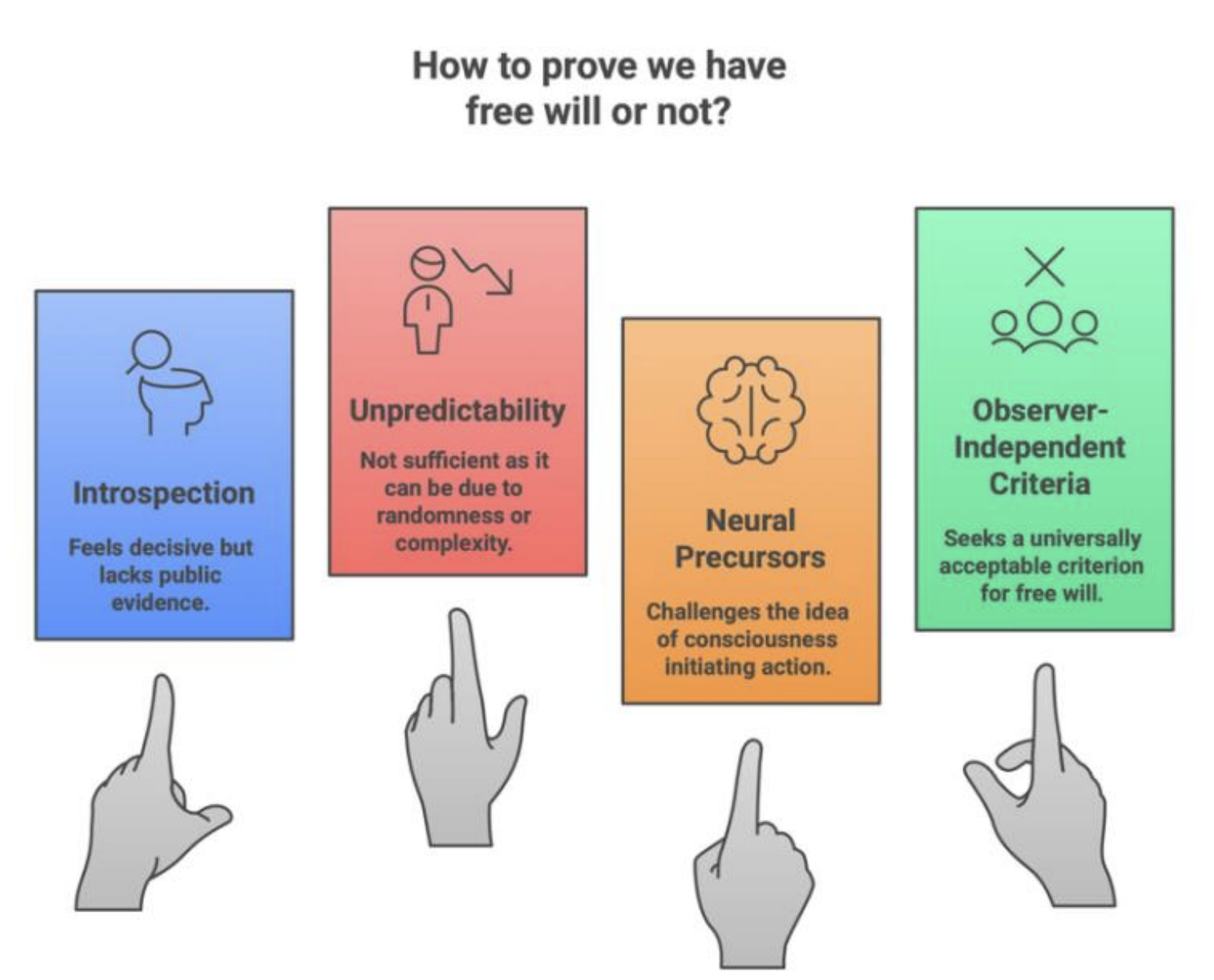 ‘Abdu’l-Bahá has given us a definition of free will:
“Likewise every arrangement and formation that is not perfect in its order we designate as
accidental, and that which is orderly, regular, perfect in its relations and every part of which is
in its proper place and is the essential requisite of the other constituent parts, this we call a
composition formed through will and knowledge.” [ 4 ]
Combining this definition with ‘Abdu’l-Bahá’s framing of complexity as the manner of its
dynamic interaction with laws of nature, we can create a plausible definition and a universal
criterion for free will:
Free will is the capacity of an agent to organize multiple interdependent components into a
holistic system that can harness and leverage natural laws to operate against nature’s local
tendencies.
The search for free will thus parallels the earlier shift from configuration-based to behavior-
based analysis. This framework establishes universal criteria for detecting free will : observing a
module escape a distant planet’s gravitational force through a telescope warrants a conclusion
that its creator possesses free will. These criteria remain compatible with natural law while
pointing to a higher-order mode of control that unpredictability alone cannot capture.
‘Abdu’l-Bahá has given us a definition of free will:
“Likewise every arrangement and formation that is not perfect in its order we designate as
accidental, and that which is orderly, regular, perfect in its relations and every part of which is
in its proper place and is the essential requisite of the other constituent parts, this we call a
composition formed through will and knowledge.” [ 4 ]
Combining this definition with ‘Abdu’l-Bahá’s framing of complexity as the manner of its
dynamic interaction with laws of nature, we can create a plausible definition and a universal
criterion for free will:
Free will is the capacity of an agent to organize multiple interdependent components into a
holistic system that can harness and leverage natural laws to operate against nature’s local
tendencies.
The search for free will thus parallels the earlier shift from configuration-based to behavior-
based analysis. This framework establishes universal criteria for detecting free will : observing a
module escape a distant planet’s gravitational force through a telescope warrants a conclusion
that its creator possesses free will. These criteria remain compatible with natural law while
pointing to a higher-order mode of control that unpredictability alone cannot capture.
 ## Identifying Intelligent Causation
A persistent weakness in Intelligent Design argumentation is its reliance on contested notions of
“complexity” and “function.” What counts as complex often reflects intuitive impressions rather
than consistently applicable criteria across various contexts and observers. “Function” can be
assigned retrospectively once a structure is known, risking hindsight bias. The result is a
framework that appears compelling to those sharing its intuitions while remaining
methodologically fragile to others.
Darwinian theory avoids some pitfalls by tying function to differential contribution to survival
and reproduction. Yet as a general account of complexity, evolutionary discourse can remain
imprecise. Complexity may refer to the number of parts, interdependence, information content,
hierarchical organization, or pathway length, meanings that don’t always converge. This
ambiguity weakens attempts to use “complexity” as a term for broader philosophical
conclusions.
The Bahá’í framework proposes a more observer-independent approach by shifting attention
from static arrangements to law-governed interactions. Design is best detected not merely by
intricate configuration, but by organized systems that exploit nature’s regularities to achieve ends
running counter to local natural law tendencies. Within this Bahá’í framework, design can be
defined operationally as follows:
An artifact is designed by an intelligent agent if it comprised of multiple interdependent
components arranged into a holistic system that harnesses natural laws to operate against
nature’s local tendencies.
Two features matter. First, the criterion anchors in natural law, supplying a universal reference
point for any observer, anywhere. Second, it focuses on capacity rather than historical pathways.
Design detection infers an organized agency expressed through dynamic interaction with nature’s
laws, not a substitute for mechanistic explanations.
This framework doesn’t treat design language as a replacement for biology, geology, genetics, or
other empirical disciplines. Natural inquiry into evolutionary history, causal mechanisms, and
ecological constraint remains valid. The aim is narrower: articulating criteria under which
“design” constitutes disciplined inference about organized agency while leaving intact the
scientific work of reconstructing how organisms and environments change over time.
The Bahá’í approach (as interpreted by the author) also aligns with scientific realism, which
infers unobservables - electrons, quarks, fields - from measurable effects. Methodological
naturalism and scientific realism need not be rivals: the former governs the investigation of
lawful processes; the latter justifies inference beyond direct observation. Detecting design
attempts to unite these commitments: accepting nature’s and life’s evolutionary story while
refining when and how claims of an intelligent agent are warranted.
## Conclusion
This article moved from debates about biological order and probability to a more disciplined
approach to design, complexity, and agency. It argued that design reasoning falters when
evolution is treated as a uniform random search, and improves when it focuses on cumulative
pathways, independent specification, and the limits of after-the-fact inference. Building on
‘Abdu’l-Bahá’s insights, it then added a dimension often neglected in both ID and Darwinian
discussions: shifting emphasis from static configuration to dynamic behavior, or how beings and
artifacts engage natural laws. Using an Aristotelian functional hierarchy extended by this law-
engagement lens, this article proposed an interpretation that gravitates towards a more observer-
independent criterion of complexity. The resulting method treats design detection as identifying
organized systems that harness universal laws to counter local tendencies, while fully preserving
the scientific project of explaining evolutionary history.
Within this framework, “intelligent design” allows at least three readings. One holds that the
Divine created a lawful cosmos that unfolds through natural processes, yielding life through
evolution. Many naturalists can accept the explanatory sufficiency of those processes while
treating belief in the Divine as faith rather than science. A second reading agrees with the
scientific account of life’s development while arguing that philosophical reasoning can still
justify an inference to agency behind those processes, so design is “detected” without displacing
biology. A third reading aligns with the Intelligent Design movement: natural processes are
deemed inadequate, life is treated as directly designed, and mainstream conclusions are rejected,
often without a comparably detailed, testable alternative.
## Identifying Intelligent Causation
A persistent weakness in Intelligent Design argumentation is its reliance on contested notions of
“complexity” and “function.” What counts as complex often reflects intuitive impressions rather
than consistently applicable criteria across various contexts and observers. “Function” can be
assigned retrospectively once a structure is known, risking hindsight bias. The result is a
framework that appears compelling to those sharing its intuitions while remaining
methodologically fragile to others.
Darwinian theory avoids some pitfalls by tying function to differential contribution to survival
and reproduction. Yet as a general account of complexity, evolutionary discourse can remain
imprecise. Complexity may refer to the number of parts, interdependence, information content,
hierarchical organization, or pathway length, meanings that don’t always converge. This
ambiguity weakens attempts to use “complexity” as a term for broader philosophical
conclusions.
The Bahá’í framework proposes a more observer-independent approach by shifting attention
from static arrangements to law-governed interactions. Design is best detected not merely by
intricate configuration, but by organized systems that exploit nature’s regularities to achieve ends
running counter to local natural law tendencies. Within this Bahá’í framework, design can be
defined operationally as follows:
An artifact is designed by an intelligent agent if it comprised of multiple interdependent
components arranged into a holistic system that harnesses natural laws to operate against
nature’s local tendencies.
Two features matter. First, the criterion anchors in natural law, supplying a universal reference
point for any observer, anywhere. Second, it focuses on capacity rather than historical pathways.
Design detection infers an organized agency expressed through dynamic interaction with nature’s
laws, not a substitute for mechanistic explanations.
This framework doesn’t treat design language as a replacement for biology, geology, genetics, or
other empirical disciplines. Natural inquiry into evolutionary history, causal mechanisms, and
ecological constraint remains valid. The aim is narrower: articulating criteria under which
“design” constitutes disciplined inference about organized agency while leaving intact the
scientific work of reconstructing how organisms and environments change over time.
The Bahá’í approach (as interpreted by the author) also aligns with scientific realism, which
infers unobservables - electrons, quarks, fields - from measurable effects. Methodological
naturalism and scientific realism need not be rivals: the former governs the investigation of
lawful processes; the latter justifies inference beyond direct observation. Detecting design
attempts to unite these commitments: accepting nature’s and life’s evolutionary story while
refining when and how claims of an intelligent agent are warranted.
## Conclusion
This article moved from debates about biological order and probability to a more disciplined
approach to design, complexity, and agency. It argued that design reasoning falters when
evolution is treated as a uniform random search, and improves when it focuses on cumulative
pathways, independent specification, and the limits of after-the-fact inference. Building on
‘Abdu’l-Bahá’s insights, it then added a dimension often neglected in both ID and Darwinian
discussions: shifting emphasis from static configuration to dynamic behavior, or how beings and
artifacts engage natural laws. Using an Aristotelian functional hierarchy extended by this law-
engagement lens, this article proposed an interpretation that gravitates towards a more observer-
independent criterion of complexity. The resulting method treats design detection as identifying
organized systems that harness universal laws to counter local tendencies, while fully preserving
the scientific project of explaining evolutionary history.
Within this framework, “intelligent design” allows at least three readings. One holds that the
Divine created a lawful cosmos that unfolds through natural processes, yielding life through
evolution. Many naturalists can accept the explanatory sufficiency of those processes while
treating belief in the Divine as faith rather than science. A second reading agrees with the
scientific account of life’s development while arguing that philosophical reasoning can still
justify an inference to agency behind those processes, so design is “detected” without displacing
biology. A third reading aligns with the Intelligent Design movement: natural processes are
deemed inadequate, life is treated as directly designed, and mainstream conclusions are rejected,
often without a comparably detailed, testable alternative.
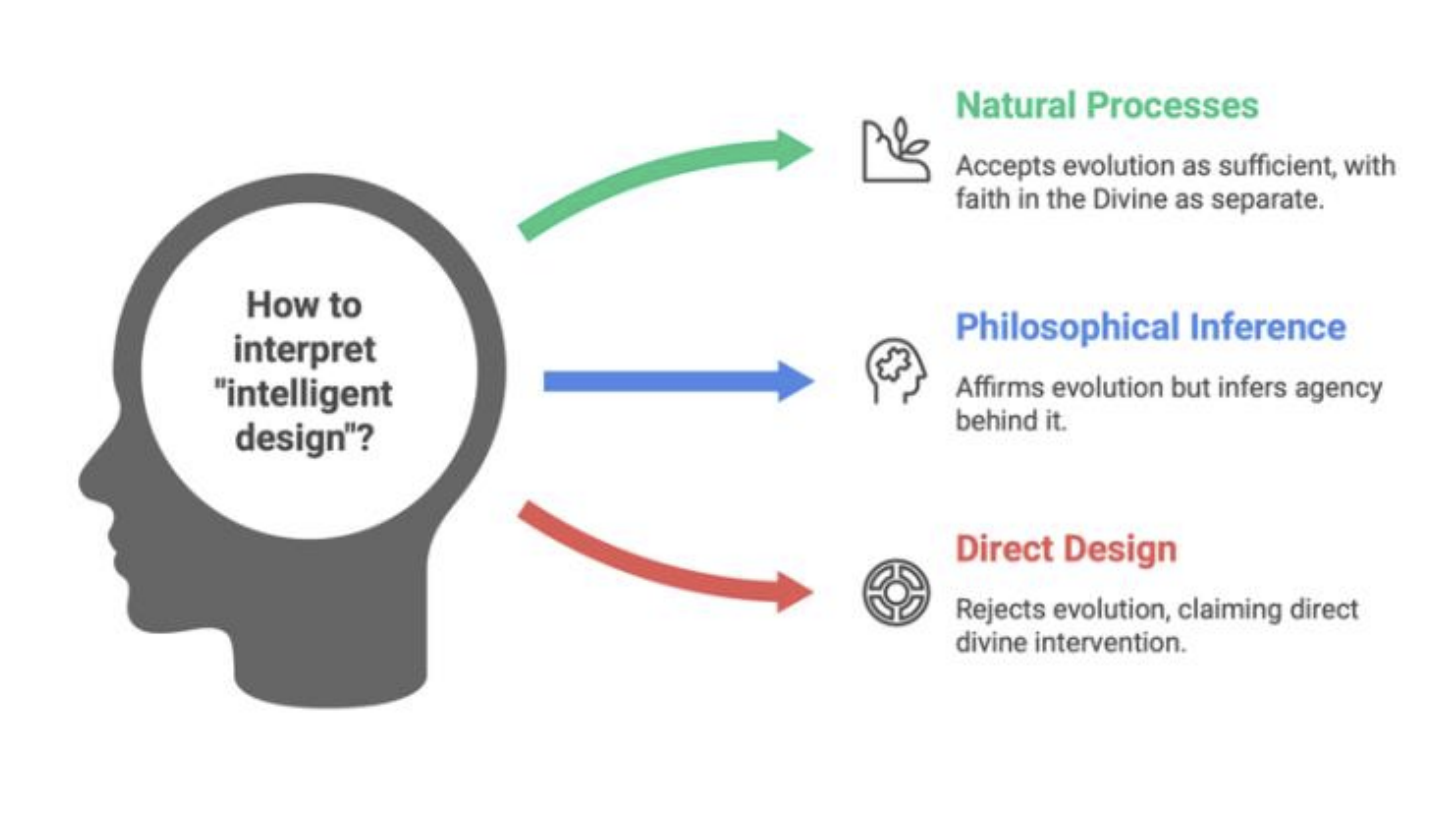 Caution is warranted before drawing hard conclusions. Several key questions remain empirically
open, and future evidence may sharpen what we can claim. If scientists eventually generate
living systems from basic ingredients, from scratch, that would make “natural sufficiency”
concrete rather than speculative. Likewise, more powerful computer simulations of early-Earth
chemistry can stress-test origin pathways, probing how lifelike organization might arise under
plausible constraints and whether natural processes can yield systems that harness universal laws
to counter local tendencies.
Disagreement about “design” often turns less on the term than on which reading of it is assumed.
The Bahá’í-oriented approach developed here aims to preserve scientific explanation while
clarifying when a design inference could be warranted as a philosophical conclusion grounded in
observer-independent criteria tied to natural law.
[1] Tablet to August Forel Page 16
[2] Tablet to August Forel Page 23
[3] Tablet to August Forel Page 11
[4] Tablet to August Forel Page 23
Caution is warranted before drawing hard conclusions. Several key questions remain empirically
open, and future evidence may sharpen what we can claim. If scientists eventually generate
living systems from basic ingredients, from scratch, that would make “natural sufficiency”
concrete rather than speculative. Likewise, more powerful computer simulations of early-Earth
chemistry can stress-test origin pathways, probing how lifelike organization might arise under
plausible constraints and whether natural processes can yield systems that harness universal laws
to counter local tendencies.
Disagreement about “design” often turns less on the term than on which reading of it is assumed.
The Bahá’í-oriented approach developed here aims to preserve scientific explanation while
clarifying when a design inference could be warranted as a philosophical conclusion grounded in
observer-independent criteria tied to natural law.
[1] Tablet to August Forel Page 16
[2] Tablet to August Forel Page 23
[3] Tablet to August Forel Page 11
[4] Tablet to August Forel Page 23